

9 Signs Your Car is a Total Loss After an Accident

Wondering if your car is totaled after a crash? If the cost to fix the damage exceeds the vehicle’s actual cash value, or ACV, it very well could be. (As a general rule, insurance companies, utilizing a Total Loss Formula, may refuse to cover autobody repairs that cost more than 50% to 80% of your vehicle’s ACV.)
But that begs yet another question: When is a car considered totaled? About 25% of all car crashes will result in a total loss, but let’s take a look at some of the most common signs your car is totaled after getting into an accident.
1. Fluids Leaking
Any damage to a fluid system or tank may result in a salvage claim, though this will depend on the extent of damage and type of fluid affected. A cracked windshield wiper fluid reservoir, for instance, is not as significant as a broken oil pan and pump system.
Some of the more essential vehicle fluids include:
- Antifreeze
- Brake
- Coolant
- Engine or motor oil
- Power steering
- Transmission
- Windshield washer
It’s important to note that any excessive fluid leak warrants a trip to an auto body shop near you. There’s a high probability that multiple reservoirs and systems have been damaged, oftentimes beyond repair.
2. Significant Front-End Damage
Getting rear-ended at a stop sign is less likely to result in a total loss; that person who rear-ended you, however, is in for a world of “salvage title” hurt.
About 80% of a vehicle’s essential components are located in and around the engine compartment. A frontal or head-on collision at a moderate speed of just 30 mph will activate crumple zones (or crush zones), which is when internal damage to engines, steering systems, gearboxes and other components usually occurs.
3. Severely Bent or Damaged Frame
Extensive damage to your vehicle’s frame is very expensive to repair. If you notice any of these signs of car frame damage after a collision, it’s a safe bet that your insurance company will total your vehicle:
- Visibly bent
- Cracks on frame components
- Damaged suspension
- Metal-on-metal sounds when in motion
- Tires severely misaligned
Bent frames aren’t always evident at first glance. Poorly tracking wheels, misaligned tires and replacement parts that don’t fit properly can be indicative of a damaged frame, though they could also be caused by less serious problems. You may not know the extent of the damage until it’s in the repair shop.
4. The Engine Won’t Start
A non-working engine is typically a bad sign after a crash. This could mean anything from severe engine damage to a loosened belt, but if there is any visible structural or mechanical damage, it’s probably the former.
5. Your View is Obstructed
Automotive components that are warped or damaged badly enough to block a driver’s view could be a problem. Bent fenders and grilles, hoods that won’t close, or any interior part that’s found a new home on the outside are due to more severe—and expensive-to-repair—damage.
6. Deployed Airbags
Although not always true, a car accident that results in airbag deployment may be too costly for insurers to cover. This is partly because airbag replacement service, and the airbags themselves, can be thousands of dollars, depending on vehicle make and model. Replacing airbags on an older car may be cost prohibitive, especially if there is any body damage to fix, but every auto insurance agency will differ.
7. Fire or Flood
Your car isn’t totaled until insurance says it is. However, if a collision caused your vehicle to catch fire, it’s almost a guarantee that it will be marked as a total loss. If the vehicle was submerged in water, is also safe to say that it will be flood- or water-damaged.
8. Your Car’s Old
Everything comes down to age. Your vehicle’s ACV will be determined by its current, nondamaged resale price. If your car is older—7-10 years is a good cutoff—and has lots of miles on its odometer, it’s already seen most of its value depreciated. Any moderate or significant autobody repairs will likely cost too much for insurance to cover.
This is one major reason why buying a new or certified pre-owned vehicle is such a good investment. In the event of a collision, the risk of your car being a total loss is lower. Just 2% of new vehicles (4 years or newer) are declared total losses, compared to over 13% of vehicles 8-plus years or older.
9. Determined by Your State’s Total Loss Threshold
How do adjusters determine if a car is totaled? Each state has their own laws in place for automobile total loss thresholds. Insurers use these laws to identify when a car repair would cost more than paying for a replacement vehicle.
In Kansas, the Total Loss Threshold is set at 75%, meaning collision repairs must not cost more than 75% of the vehicle’s current fair market value.
In Missouri, the Total Loss Threshold is 80%.
Other states, like Illinois, allow insurers to calculate amounts follow a total loss formula to identify a vehicle’s salvage value, then compare that to the cost of repairs. If the salvage value is lower than the price for autobody work, the vehicle will be a total loss.
Want to know what your state’s automobile total loss threshold is? Click here.
What to do When Your Car is Totaled
So, what happens when your car is totaled by insurance? You’ll need to go through the necessary steps in order to get your claim settled and back on the road.
- File your claim
- Have an adjuster assess the damage
- Request a tow to and get an estimate from a good auto body shop near you
- Get a rental vehicle
- Put together all your paperwork, including vehicle title, receipts for aftermarket accessories, previous repair invoices, etc.
- Know your vehicle’s fair market value or actual cash value
- Contact your lender, if needed (and don’t forget your GAP insurance!)
- Negotiate claims if your vehicle’s assessed ACV or market value is too low
- Collect belongings from salvaged car
- Hire a lawyer if laws were broken and/or to pay for excess hospital bills
- Shop for a new or newer vehicle
Additionally, you can also choose to keep your vehicle, though it’s not usually recommended. A vehicle that has a “salvage” title is worth diddlysquat unless it’s a very rare, high-end or valuable model. Speak with your insurer for more details about your options.
Need Autobody Repair in Kansas City?
Whether you got t-boned or hit a deer, bring your vehicle to McCarthy Collision Centers for a free collision repair estimate! We have autobody shops in Olathe, Overland Park, Blue Springs and Lee’s Summit. As a McCarthy customer, you’ll also receive assistance with your insurance claims.
Contact 1-800-NEW-AGAIN to request a tow or contact a McCarthy body shop near you.
So, You’ve Hit a Deer with Your Car

Deer rutting season is once again upon us, and you know what that means—no, we’re not talking about picking up a box of summer sausage. This is the time of the year where deer are most active, and the risk of striking one in your car skyrockets.
There are plenty of precautions you can take to avoid deer collisions, but sometimes, hitting a deer with your car is an unavoidable accident. So, Let’s take it step by step and go through the checklist of actions you should take, so you’re not stranded on the side of the road asking yourself, “What do I do if I hit a deer?”
What to Do After Hitting a Deer
Wildlifeinformer.com estimates about 53,000 mule deer and 650,000 whitetail deer in the state of Kansas. Meanwhile, Missouri counts 1,400,000 whitetail deer within their state boundaries.
That’s a lot of deer. If you live around Kansas City, the likelihood that you’ll one day run into this problem isn’t exactly low.
Let’s walk through the whole process, shall we?
Make Sure Nobody is Injured
The most important thing in any auto accident is to make sure nobody inside the car has been hurt. Basic safety measures like proper seatbelt and child harness use are crucial to this.
Do a quick check of yourself and all passengers, especially if the collision ended up putting your car in the ditch. A male white-tail can exceed 200 pounds, especially when fattened up for the winter, and this is enough mass to do a serious number on your car. Before you do anything, check everyone in the vehicle for possible symptoms of concussion or whiplash, including:
- Severe head pain
- Severe neck pain
- Nausea
- Vomiting
- Dizziness or disorientation
Do Not Exit the Vehicle Yet—Call 911
Assuming the deer is injured and hasn’t run off, you should refrain from exiting the vehicle to inspect any damage until the authorities arrive. While deer are rarely aggressive with humans, a hurt or scared animal should always be handled carefully, especially if it’s an eight-point buck with footlong antlers.
Dial 911 immediately, and wait for the authorities to arrive to offer their assistance.
Contact Your Insurance Company
While you wait for help to get there, take the opportunity to contact your insurance provider. Depending on your coverage, personal injury or damage to your vehicle may be partially or even fully taken care of. Don’t file a claim just yet though—more on that in a second.
Once the Authorities Arrive
After first responders arrive—hopefully with some sort of animal control professional in tow—wait for them to give you the go-ahead before you get out to assess the vehicle’s condition.
EMTs may also want to check you for any potential injury. Once they’re satisfied that you and any passengers are in good shape, and the deer has been cleared from the scene, you can file a police report.
Quickly Document the Scene
This is optional, as you’ll also have time to do this more thoroughly later. It should just be a preliminary few photos of the general location, and a basic overview of vehicle damage. Assuming you’re able to, taking a few photos and videos of the location at the time of the accident can be beneficial when the time comes to file an insurance claim.
Move the Vehicle to a Safe Place
After you’ve filed a police report and inspected the vehicle, you have two options: drive it yourself, or call a wrecker. This will, of course, depend on just how much damage your vehicle incurred. Most accidents involving deer happen around either dusk or dawn, so visibility may be minimal. If your headlights are damaged, or you see fluid leaking, or the vehicle doesn’t drive straight, call for a tow.
When in doubt, better safe than sorry is always a good rule of thumb—do not move the car if there’s even the slightest question about its drivability, contact a towing service near Kansas City.
File a Claim
With the incident officially documented with police, and the vehicle in a safe place, it’s finally time to contact your insurance to file a proper claim. This will involve taking extensive photos and videos of damage to the vehicle, and maybe even having it inspected. Of course, your course of action will depend on your insurance coverage.
Schedule Service
Assuming your insurance doesn’t total the vehicle, you’ll most likely want to get any damage promptly fixed—after all, nobody likes being stranded. If you need to schedule auto body repair in Kansas City, McCarthy Collision Centers offer convenient locations for you to get:
- Front end alignment
- Paintless dent repair
- Auto glass and windshield repair
- Airbag replacement
- Suspension repair
- And more!

How to Avoid Deer on the Road
Now that we’ve talked about what to do in case you run into a deer, let’s check out some ways you can prevent it from happening entirely.
Drive Slowly
This one’s an obvious no-brainer. The faster you’re going, the longer it takes you to stop safely. It’s still the single best way to avoid deer collisions.
Never Slam on the Brakes
When a deer leaps out in front of the vehicle, it’s a natural reaction to try and kick that brake pedal right through the floor. This should be avoided at all costs, especially if roads are wet or icy, as they often are this time of year.
Never Swerve the Wheel
Another understandable impulse is to jerk the wheel to try to avoid the deer. This is one of the last things you should do, as it increases the likelihood of hitting a tree, a ditch, or even another vehicle. Limiting your speed, applying firm but gentle braking, and, yes, hitting the deer straight on is widely accepted as the best way to avoid injury.
Avoid Driving at Certain Times
It’s a common misconception that deer are nocturnal, when that’s technically not the case. Most deer are considered to be crepuscular, which is just a fancy word that means they’re most active around dusk and dawn. This is, incidentally, why most hunters do their thing in the wee hours of the morning, take a break in the middle of the day, then maybe go out again in the early evening.
So, the upshot here is that you as a driver should be extra vigilant when the sun is about to rise, and just after it starts to set.
Don’t Do the Whole “Turn the Lights Off and Gun It” Thing
If you ask some folks, they’ll tell you that you should kill your headlamps and maintain a straight course. This advice apparently stems from the argument that the headlights are what makes the deer prone to freezing, hence the old saying.
Since we just talked about how the majority of collisions happen around nighttime, we probably don’t need to explain why turning off the lights while cruising down the road is a bad idea.
Consider a Vehicle with Driver Assistance Features
Many newer models from popular McCarthy brands, like Chevrolet, Hyundai, and Subaru, employ Advanced Driver Assistance Systems, or ADAS for short. Most of these include some form of forward collision detection, as well as emergency automatic braking. This can be an especially effective deer alert for vehicles.
ADAS systems are not meant to be a substitute for safe driving practices, but they can absolutely help mitigate risk. If you’re in the market for a new car, ask a local McCarthy sales representative about your potential options.
Why Choose McCarthy?
With four convenient auto repair locations around the Greater Kansas City area, plus another in Sedalia, McCarthy Collision Centers is your one-stop shop. We offer:
- Access to 24/7 towing
- Free auto body repair estimates
- Compatibility with all insurances
- Authentic OEM parts
- Lifetime body and paint guarantee
We have all the parts, certifications, and experience you need to get your vehicle back on the road, pronto. If you have car damage from hitting a deer, submit an estimate online, or give us a call at 1-800-NEW-AGAIN.
Who’s at Fault in a Multi-Car Collision?

While it may seem fairly simple to figure out who is at fault in a one- or two-car collision, multi-car accidents are very different. Typically, the car that rear-ends another is determined to be at fault because that driver is responsible for maintaining a safe following distance. Right?
Not so fast. In most multi-car accidents, there is no single factor to blame. With each additional vehicle added to the collision mix, things get even more complicated. For instance, if a second car was rear-ended, the fault lies with the third driver or whoever was the first to make contact. Right?
Factors That Determine Fault
We said it gets complicated, and that wasn’t an overstatement. While a “chain reaction” accident is frequently caused by the negligence of the first driver, there are often other factors contributing to the accident, such as weather, road conditions, or unexpected braking from cars further up the chain.
Then there are state laws to take into consideration.
As an example, Kansas and Missouri are both “comparative negligence” states. That means that either a police officer on the scene, a judge or jury in a courtroom, or the insurance companies during the settlement process can ascribe partial responsibility to different drivers in a multi-car accident. For instance, they may determine that one driver is 70% to blame for driving too fast while another is 30% to blame for driving with broken brake lights.
However, Kansas and Missouri work a little differently.
- In Missouri, “pure comparative negligence” laws apply. This means if you are to blame for some part of the accident, you can receive insurance settlement payments, minus the percentage of blame you receive.
- Kansas, on the other hand, operates on a “51% rule,” which states that if you are at least 51% responsible or at fault for the accident, you cannot receive any compensation.
Oh, and did we mention “at-fault states”?
- Drivers in Kansas live in a no-fault state. This means that, in Kansas, your insurance is supposed to pay your damages while the other driver’s insurance pays theirs, and neither party goes to court. (Damages in excess of your insurance coverage may still be taken to court, however.)
- In Missouri, the driver with the most liability pays for the damages and injured parties. That’s because MO is an at-fault state.
Confused? Yeah, that’s kind of how insurance works, which is a bummer. But if you ever get into a crash, whether it’s in Missouri, Kansas or another state, just remember these tips.
Tips on Getting Through a Chain Car Crash
Regardless of the state, if you are in a multi-car collision, here are a few things to remember in order to stay safe and help determine fault:
- Stay calm.
- Call the police immediately, then contact your insurance agent while you wait.
- Stay in your car until a police officer or EMT says it’s clear to exit. The risk of repeated injuries is very high during a multi-car accident, and just because your car has stopped moving doesn’t mean that other vehicles around you aren’t still moving in unpredictable ways.
- Remain at the scene and be sure to give your account to the police. If possible, have yourself and any passengers checked out by EMTs or emergency workers at the scene.
- Once you’re able to, take pictures of your car at the scene as well as the surrounding cars. Take note of skid marks on the road, the relative position of vehicles, debris—basically, document everything you can.
- Exchange insurance information with other drivers, and exchange contact information with the police and with any witnesses at the scene.
- Call a tow truck, if one’s not already been dispatched. (You can contact 1-800-NEW-AGAIN to get towed to a McCarthy body shop near you.)
How to File an Insurance Claim After a Collision
The insurance claim process can be a mess. Take it one step at a time, and you should be able to get through it relatively unscathed. Here are some other tips:
- Contact your insurance company or insurance agent and complete any paperwork or forms they request.
- Call a crash repair shop near you. (Note that you can take your car to any auto body repair shop you prefer, not just the one your insurance recommends.)
- Request an auto body repair estimate and review it carefully. Compare it against the benefits and limits of your insurance policy.
- Have your car repaired. Keep track of all expenses related to the auto repair and the accident itself. For example, you may also need to pay for alternate means of transportation, you may miss work, or you may have medical expenses.
- Your insurance company will reimburse you according to your policy, less any deductible you owe. If your accident-related expenses exceed your settlement, you can speak again to your insurance agent or company and verify that you’ve gotten all the benefits your policy entitles you to. You may want to consider taking the other driver(s) to court to recover all your damages from the accident.
- Do try and work with a collision repair center that offers insurance claim assistance. McCarthy Collision Centers will work with you and your insurance company to ensure you get fully compensated.

McCarthy Collision Centers: We’ve Got Your Back
Although a multi-car crash might be stressful and overly complicated, there’s nothing complicated about the way our McCarthy Collision Centers work. We tow you here, we speak with your insurance company to pay for repairs, and we get you back on the road—easy as pie. If you need help after a crash in Kansas City, contact us at 800-NEW-AGAIN. We have auto collision centers throughout the Kansas City region, including Olathe, Blue Springs, Overland Park and Lee’s Summit.
Car Insurance FAQs: How Does Auto Insurance Work?

You may have read a lot of tips about how to select the best or least expensive auto insurance policy. But you may not know enough about the actual process of making an insurance claim or even how car insurance works. And why would you if you’re a careful driver who has not been in an accident? Here’s what most drivers want to know about what goes on in the background after an accident.
What Do I Do Immediately After My Accident?
Of course, the first steps after being involved in a minor car accident are to make sure everyone is safe, call 911 for police and medical assistance, and get the insurance information from all the other drivers involved.
Next, you’ll want to contact your insurance agent/company and request a tow truck to your chosen auto collision repair shop, if necessary. If you’ve been in a crash in the Kansas City region, dial 1-800-NEW-AGAIN to get a tow to your nearest McCarthy body shop. (Tip: If the airbags were deployed, don’t try to drive your vehicle to the auto body shop! You could cause another accident, which is obviously bad news.)
Once these critical actions are taken, you can get to work filing an insurance claim.
What Paperwork Do I Need to Complete After an Accident?
Call the police to the scene of the accident, so you’ll have a neutral third-party report on the facts. This police report will be the main document you’ll need to get the ball rolling on your auto insurance claim.
You may also need to file a report with the Department of Motor Vehicles, depending on state law, to describe the circumstances of the accident. You will also need to make sure you have contact and insurance details for the other drivers involved in the accident — but this critical information should be listed in the police report.
How Do I File an Auto Insurance Claim?
If you have a personal car insurance agent, you can call that person’s office during business hours. After hours, or for many larger insurance companies, you can call the claims phone number listed on your insurance card and in your policy paperwork. You may also be able to start your claims process via your insurance company’s website or app.
Most claims forms are straightforward and simply require you to fill in facts. It may help to have a copy of the police report, but often that is not available quickly enough to be of much help in initiating your claim. Don’t wait to have any paperwork like the police report in order to start your claim; you want to do this as soon as possible after your accident.
When Should I Expect My Claim to Go Through?
In most cases, a claims adjuster is assigned to your claim within 72 hours. Appraising the claim takes between a couple days and a couple weeks, though it’s usually closer to days unless you decide to dispute the appraisal.
You’ll obviously need to take your vehicle for repairs, depending on the circumstances and your insurance agent’s recommendations. Collision repair is best done by a knowledgeable mechanic trained specifically in repairing a damaged vehicle, like the technicians at our Kansas City auto collision shops.
What if My Insurance Company Wants Me to Use a Specific Auto Body Repair Shop?
Most insurance companies do have preferred auto collision centers that they have used with success in the past. They typically choose these auto body repair shops for their technicians’ ability to do the job inexpensively and in a timely manner. This is one downfall of using an insurance company-recommended auto collision repair center.
If you want to ensure that your repairs are completed on time and done with quality OEM parts, you do have the ability to request your chosen body shop. Just communicate your wishes to your agent. If you let your insurer know before you get an estimate that you wish to work with McCarthy Collision Centers, they can accommodate your request.
How Can I Make the Process Move More Quickly?
Claims and collision repair may take time — rarely is the process complete in a day or two, or even next week. You can improve your odds of getting your claim processed faster by talking to your insurance agent and filing your claim as soon as possible. (Again, don’t wait for the police report in order to start your claim; it will be added when it’s available.)
Remember that you can be honest and thorough with your agent, who is tasked with assisting you no matter who was at fault in the accident. Listen to what your agent asks you to do and move fast to get that done. If an investigator is assigned to your case, cooperate with that person and help him or her with any evidence requested.
Finally, you can be persistent with your adjuster. Don’t call several times a day, but you can check in every couple of days to politely inquire where your claim is in the process.
If you have additional questions about the auto body repair process, you can ask your claims adjuster. But if you’re not getting specific answers to your questions, our Kansas City collision repair shops can assist you. Contact our McCarthy Collision Centers today and we’ll help you walk through the process, either over the phone or at one of our body shops. We offer free estimates and will work on your behalf to ensure your auto insurance claim is taken care of. Stay safe out there!
7 Essential Winter Auto Body Tips for Old Cars
Like it or not, winter is fast approaching in Kansas City. That means bitter cold, snowfall, and downright messy road conditions. If you’re heading into this winter season with an older model vehicle, there are a few preventative steps you should take to ensure your car is in good working condition. Here are 7 winter auto body tips to keep you and your vehicle safe this year.

1. Check Your Fluids
One of the best ways to winterize your car is to check and fill all the necessary fluids. It’s particularly crucial to have the right coolant to prevent fluid from freezing inside your radiator. If you’re not sure which one to use, consult your owner’s manual. In Kansas City, where temperatures can fall below freezing, you may want to consider using a thinner oil in the colder months to ensure smooth fluid movement.
In addition, freeze-resistant windshield wiper fluid will help keep your driving vision clear through rain, snow, and muddy slush backsplash.
2. Upgrade to Snow Tires
For driving in wet and slippery conditions, it’s best to switch out your summer or all-season tires for a more rugged set of winter tires. Dedicated winter tires have different tread patterns and a unique rubber composition designed for increased traction on greasy roads. Without them, you may find yourself sliding and spinning, creating an unsafe situation for you and other drivers.
3. Allow Warm-Up Time
Newer model cars can simply be put in gear and driven to your destination—no matter the weather conditions. Older model cars, though, may need a few minutes to warm-up before venturing out into the winter landscape. If your car stalls or sputters in cold weather, you probably need to let it idle before you take off.
A warm-up period gives your older car a chance to heat up the oil, allowing it to flow more smoothly. Try allowing the car to idle while you brush off any fallen snow. Those few minutes should be ample time to prepare the engine for exertion—no revving required.

4. Brighten Your Lights
Snow, rain, and other falling precipitation can seriously interfere with your driving visibility. If you have an older model car, it has likely been some time since your headlights were replaced or upgraded. Before any snow starts falling, make sure your headlights, taillights, and turn signals are in proper working order.
You might consider upgrading to a high-output headlamp for brighter lighting and a lengthier field of vision. If you have plastic headlights that are murky and dull, get them restored before winter arrives. While it may not seem like a big deal now, improving your road vision will greatly increase your safety this winter. Throughout the cold season, clean your headlamps with glass cleaner, soap and water, or toothpaste to keep them crystal clear.
5. Fend Off Rust
To prevent the development or worsening of rust on your older model car this winter, start by washing it thoroughly. Salt, mud, and grime will be working overtime through the winter season to eat away at your vehicle. You don’t have to go outside every other day in a full snowsuit to hose it off—simply stop at the car wash every few weeks when the roads are down to bare pavement.
Most car washes have an undercarriage cleaning option. It’s definitely worth spending a couple extra bucks to reach the parts of the car that you can’t see. You can also opt to add an oil undercoating to your vehicle to further deter the formation of rust. These simple rust prevention practices will add years of life to your vehicle’s body and undercarriage. For that reason, rust prevention is one of the most important winter auto body tips for old cars.
6. Opt for an Engine Block Heater
An engine block heater can help reduce the harsh effects of winter on your car’s engine. (It also makes the first few minutes of your drive less cringe-worthy!) This type of heater is installed under your hood and has a port for an extension cord that comes out through your grill.
All you have to do is plug it in while your vehicle is turned off. The heater warms up the engine block, which in turn warms up the oil. The oil thins out and lubricates the engine quickly, eliminating the usual sluggishness that comes with a cold-engine start.

7. Don’t Let the Gas Tank Hit E
It’s true, getting out of your warm car to pump gas in the frigid winter air is no pleasant task. As much as you despise this chore, it’s never a good idea to drive around with an almost-empty gas tank in the wintertime. Cold temperatures cause condensation to form on the walls of a nearly-empty gas tank. If that water makes it into your fuel lines, it will freeze and block gasoline from reaching your engine.
The damage that can result from driving on an empty tank in the winter warrants costly repairs. The high price of repairs certainly cancels out the convenience of skipping a gas station stop on your way home from work. So, bundle up! You’ve got to get out there and fill your tank in spite of icy weather.
Visit McCarthy Collision Centers For More Help
Winter is nearly here. Are you prepared? If not, head to one of our body shops near Kansas City to get your dents un-dented, scratches un-scratched, and chipped windshields un-chipped. We have several locations throughout Kansas City, so contact us at 800-NEW-AGAIN to schedule your appointment. From all of us at McCarthy Collision Centers, we hope you stay safe on the roads this winter!

Traffic safety is a major concern for all of drivers as a large number of car accidents happen every year in America. While some accidents are relatively minor, others are devastating or fatal. As we close in on the colder, snowier, and icier Kansas City weather, it’s important to know what’s happening around you when driving and to be aware of the traffic laws and regulations. The causes of car accidents are vast, but we’ve compiled the top six reasons why people crash, as well as a few solutions to prevent them from happening.
1. Distracted Driving
Distracted driving is the biggest cause of accidents in the United States—and the numbers suggest this problem is growing every year. According to the CDC, 9 people are killed and another 1000 are injured by distracted drivers each day. Anything that causes a distraction to you while driving is considered dangerous; in many states, texting and driving is now illegal—it is illegal in Kansas but not Missouri—and in some places just handling a phone while behind the wheel has been outlawed. But it’s not just phones; smoking, eating, holding pets, reading, applying makeup and even loud music can be deadly while driving.
SOLUTION: Pay attention to the road, not what’s happening in the car. If you’re doing anything other than driving while behind the wheel, then you’re doing too much. Nothing is more important than your life or the lives of others. So, put down the phone and invest in a vehicle that has hands-free capabilities to ensure you’re keeping your eyes on the dotted lines, not the emoticons in your group text.
2. Drunk Driving
Drunk driving is one of the biggest causes of vehicular death in the U.S. According to the MADD website, every 2 minutes someone is injured in a drunk driving accident.
SOLUTIONS:
- If you’ve been out for a drink, even if you’re a just a little tipsy, then you shouldn’t be behind the wheel of a car. Take a taxi, Lyft or ask a friend to be your designated driver.
- If you’re driving when you know that people have been drinking (New Year’s, past certain times at night, etc.), be vigilant and watch for the tell-tale signs of drunk driving: swerving in and out of lanes, speeding or going abnormally slow, and obsessive braking.
- If you suspect someone of driving drunk, take down their license number and call the police (this applies to anyone under the influence, not just those who have been drinking alcohol). Even if that driver isn’t a direct threat to you, they may be to others.

3. Weather
No matter if it’s rain, snow or ice, wacky weather can play a big part in raising traffic accident incidences. The roads become more slippery, visibility too low, and drivers too oblivious to the changing conditions and immediate dangers presented by inclement weather. In Kansas, for instance, over 5% of all annual accidents were directly caused by poor wintery road conditions.
SOLUTIONS:
- If there’s a chance of bad weather, you should try to avoid driving.
- If you’re in the middle of driving and the roads become too treacherous, then pull over and wait until the storm passes.
- Before winter approaches, check your tires for wear that can cause hydroplaning.
- In the case of snow and ice, especially on rural Missouri or Kansas roads, tire chains may be required to keep your vehicle from sliding.
- If your car is covered in snow, be sure to remove all of it before driving (yes, even the snow left on top), as large and frozen sections of snow flying off car roofs can create accidents.
- Observe all safety precautions when driving or preparing to drive in bad weather.

4. Speeding
As quoted by iihs.org, “in 2015, speeding was a factor in 27 percent of motor vehicle crash deaths.” Pushing the speed limit is a dangerous stunt to pull while driving. Although driving just 5 mph over the speed limit may not seem too terrible, it can lead to dangerous conditions when combined with slower or other aggressive drivers. Plus, the faster the car is going, the less time you’ll have to react to immediate threats—that’s just a fact.
SOLUTIONS:
- Follow the speed limits and don’t try to rush when you’re driving. The speed limits are there not as a precaution, but as a law, as they correlate to the type of neighborhood, pedestrian numbers, businesses, and flow of traffic in the area.
- If you’re in a habit of running late, then practice better time management, not racing in a car.
- If you simply have a lead foot, invest in a new vehicle that offers adaptive cruise control—it could very well save your life.
5. Reckless Driving
Motor vehicle crashes are the leading cause of teenage deaths in the USA. Quite often, this is due to reckless driving, such as texting while behind the wheel, although the experience level of the driver can certainly play a part.
SOLUTIONS:
- Don’t be too aggressive on the road. There’s a difference between defensive driving and reckless driving, and too often teenagers fall into the latter category.
- Don’t change lanes too quickly or without using a blinker.
- Don’t speed. If you feel like your driving is raising your adrenaline levels, chances are you belong on the track, not an open road.
- Don’t take corners too quickly.
- Pay attention to the laws and follow them; they’re there for a reason.
6. Running Reds
While it may seem a bit obvious to follow the law and stop at a red light, there are many people who don’t. According to iihs.org, on average, someone is running a red light every 20 minutes.
SOLUTIONS:
- You learned it in preschool: Red means stop, and that’s a law put in place for both traffic flow and driver safety.
- If you’re sitting at a red light that turns green, you have the right of way to proceed. But having the right of way doesn’t mean you’re safe! It’s always a good idea to make sure no one else is coming through the intersection before you go ahead. Remember: Someone runs a red light every 20 minutes—don’t be a victim of that crime.
- Practice defensive driving at all times.
Whenever you drive you should remember to obey the laws and be vigilant about watching the drivers around you. Be careful, remove distractions and focus while driving to remain safe.
Accidents happen though, and when they do, you want a trusted collision center and mechanic to back you up. If you’ve been in a collision around KC, bring your vehicle or have it towed into one of our auto body shops near Kansas City. With collision repair shop locations in Overland Park and Olathe, KS, as well as Blue Springs and Lee’s Summit, MO, we can help get your car sorted after a crash.
Call us at 800-NEW-AGAIN or contact your nearest McCarthy collision center near Sedalia to schedule an appointment for auto body repairs. And drive safe out there!
Car Flood Damage: Everything You Need to Know
Car water damage can happen to the best of us. Simply parking in the wrong place, at the wrong time, can result in a flooded vehicle. But is your flooded car doomed to be added to the salvage yard’s heap as a “total loss”? Or is there a way to recondition your vehicle after a flood?
Here are a few tips to help you diagnose the extent of your car’s water damage, find the right fixes, and get back on the road as if the floods never happened.
Common Signs of a Flood-Damaged Car
So, your vehicle wasn’t completely submerged in flood water – good, you’re in a better position than most. However, even a slightly submerged vehicle could have contracted some nasty flood-damage issues that require immediate attention. As you inspect your vehicle, be on the lookout for these common, telltale signs of water damage that may require you to get a salvage title.
- Water in the oil – Check your oil dipsticks for any sign of water. Water inside your oil reservoir will turn the oil milky, cloudy, or filmy. In most instances, flood damage to the oil reservoir will necessitate the complete replacement of the engine, though most car owners will opt to salvage their vehicle instead. In any event, don’t attempt to drive your vehicle; instead, get it towed to your auto body shop or service center for an inspection.
- Hydro-locking – It’s important that you don’t attempt to start a car that shows signs of flood damage. Turning over a hydro-locked engine can cause irreparable damage in seconds, as the vehicle will attempt to run undoubtedly contaminated oil, fuel, and fluid throughout the engine components. (If you must check the status of your engine, remove the spark plugs beforehand.)
- Wet air filters – Water flooding in through your vents will soak the air filters. If this has occurred, expect the entire HVAC system to be nonfunctional.
- Water in the headlamps – Flood water that has collected in your headlight housing normally indicates your vehicle was submerged up to its hood in water. If this is the case, you can expect to find problems with everything from your engine to the electrical system to the airbag controllers. (Airbag deployment system damage is a very serious and potentially deadly problem that usually makes it impossible to recondition your vehicle.)
- Water in the fuel tank – While it’s possible to drain a fuel tank, any water collected inside the fuel reservoir could have been forcibly pushed in through the fuel lines during a flood.
Is it possible to get car flood damage repairs?
While it’s unlikely that you can repair a severely water-damaged car in any capacity, there are some instances in which auto body or vehicle reconditioning services may be a solution.
- Freshwater flooding – Salt water causes the severe, unrepairable damage to vehicles; freshwater floods, like those that occurred in Kansas City in 2019, are less likely to come with a terminal prognosis.
- Carpets – If your vehicle was only partially submerged in a fresh-water flood for a short length of time, the damage may be limited to your carpets. In this instance, you may be able to replace the carpets inside the cabin and in your cargo or trunk area, as well as any upholstery. Ask your auto body center for advice.
- Brakes – Be sure to check for brake damage due to a flood; brake lines, rotors, and pads may become water-logged, making them more susceptible to corrosion, rust, and premature failure.
- Suspension – Flooded cars will usually damage the suspension in some way, either by causing components to rust or removing lubricants. A suspension inspection is recommended to determine if your vehicle’s water-damaged suspension system can be repaired.
- Peeling paint – If left submerged for too long, a flooded car may begin to show signs of paint peeling. This is particularly evident along the wheel wells. Paintless Dent Repair service may be an option, so long as no other vehicle flood damage is evident.
Does your insurance cover flood damage?
You’re most likely covered for flood damage if you have comprehensive auto insurance, though you’ll need to speak with your auto insurance agent for details.
Here are the common steps you need to take to file a flood-damaged vehicle claim:
- Contact your insurance company right away. You’ll treat this just like any other claim; if the car damage came from a large-scale event like the 2019 Kansas City floods, expect things to move a little slower. It’s likely the insurance companies will be busy with hundreds if not thousands of claims just like yours.
- Take as many pictures of the damage as you can. Since auto water damage can worsen over time, you’ll want to start cleaning your car as soon as possible. This means, in order to capture the worst of the damage, you’ll need to record it yourself before taking a scrub brush to its carpet.
- If your vehicle flood damage isn’t severe, you may be able to get it repaired. Should our Kansas City auto body experts deem your vehicle fit for reconditioning, we’ll help you with any auto insurance claims related to a flood.
- Begin looking for a replacement car as you wait for your claim. Depending on the age of your flooded vehicle, your pay-out may allow you to buy a new or quality used car. (Check out the available vehicles for sale at McCarthy.)
Need More Help?
If you need more advice about repairing your flood-damaged vehicle in Kansas City, seek out the professionals at our Missouri and Kansas collision centers. Although it may not be possible for us to handle your car flood damage repairs, we may be able to point you in the right direction. Dial 800-NEW-AGAIN to speak with one of our specialists today.

If you’ve noticed lots of glare through your windshield, especially when driving at night, you aren’t alone. In fact, as many as one in three drivers drive with nighttime views obstructed by oily streaks on their windshields.
Unfortunately, the inside of your windshield can be an absolute pain to clean. The angles alone make the human body contort in inhuman ways, and that’s not even taking into consideration the oily film caused by “off-gassing” from your vehicle’s plastic or vinyl dashboard.
What’s “off-gassing”? Vinyl and plastic materials have oils in them. When those materials heat up (the sun is hot, or so we hear), they release those oils, which evaporate and stick to the glass. That residue is what makes interior windshield streaks so hard to get rid of.
Difficult as it is, washing an oily windshield is certainly doable. Continue reading to learn the best way to clean a windshield inside without leaving any streaks.
Here’s How to Get a Streak-Free Windshield, Every Time.
#1 – Clean Outside
If you need to clean interior windshield haze or streaks, it all starts with the outside. Why? Because it’s much easier to identify the cleanliness of an interior window if the exterior is spotless. So, give your outside windshield a very thorough hand-wash before continuing to the inside. (And don’t worry about those dark spots on your window – they’re from your polarized sunglasses!)
#2 – Wipe Inside with a Clean, Dry Microfiber Cloth
Once that’s done, use a soft, microfiber towel (or clean shop towel) to wipe the inside windshield, starting with the corners and working your way up in circular motions. (The “backhand method” is particularly effective for cleaning the lower portion of a windshield.)
Note: If the towel touches the dashboard, it’s dirty. It’s already absorbed oil, and rubbing it on your windshield will only make streaks more visible. Get a new towel!
#3 – Clean with Alcohol or a Magic Eraser
Next, you need to degrease the window. This can be done on the cheap with isopropyl rubbing alcohol applied to a clean microfiber towel, or you can opt to purchase a product like a Mr. Clean Magic Eraser. We recommend the Magic Eraser because it’s magic.
Dunk the Magic Eraser in warm water, wring it out, and clean the glass in circular motions. The Eraser should be damp at all times, and you should quickly dry the area, in circular motions, with a microfiber cloth once cleaned.
Work in quarters. That is, clean and dry one quarter of the windshield at a time. This reduces the risk of the chemical cleaning solution from the Magic Eraser from drying onto the glass.
Note: Wipe away any drips on the dashboard with a paper towel or separate cloth right away! These can stain or discolor the dash if left to dry. Read more about other things that will damage your car.
#4 – Finish with Glass Cleaner
Apply your glass cleaner directly to another clean microfiber towel. Clean the windshield in circular motions, being sure to get that area right where the dashboard and glass meet.
Flip that towel over to the dry side and rub the windshield in an up-and-down motion.
This windshield cleaning technique works with all interior windows, though you want to avoid applying alcohol or any other chemical to tinted windows. Check out these other car window cleaning tips.
How to remove stickers from car windows
To remove stickers from car glass without leaving sticky residue, you’ll need a good bit of elbow grease, even more patience, and a cleaning solution like Goo Gone. Here are step-by-step directions:
- Clean your window thoroughly and allow it to dry. If there is any dust and dirt on the window, you may scratch the glass!
- Use a razor blade and scrape away the stickers with the flat edge, while also keeping the sticker taut (pull/peel the sticker up while scraping).
- The sticker outline and sticky residue can be cleaned with a healthy spritz of Goo Gone and by scraping with the razor blade.
- Spray with glass cleaner and wipe away with a clean, soft towel.
- Repeat and wash all areas with water when happy with the results.
Of course, you want to be careful about cleaning around chipped windshields or auto glass. A mistimed move or too much applied pressure could worsen that windshield chip, necessitating a repair. Read more about why windshield chip repair kits might not be the best solution.
(P.S. If you’re wondering how to remove bumper stickers from a bumper or car body, this logic also applies. Just be extra careful not to scrape too hard, otherwise you might scratch the paint.)
How to get sap off windshield
If you weren’t aware, tree sap can damage car paint. But what effect does it have on automotive glass?
When left alone for too long, tree sap on a windshield or car window will start “baking” in the sun, making it ever more difficult to remove. The longer it stays on glass, the more time you’ll have to spend cleaning. It may even permanently discolor that area of your window!
How do you clean tree sap off a windshield, though?
On glass, tree sap can be wiped away with rubbing alcohol or something like anti-bacterial kitchen wipes. The chemical structure of alcohol lets it grab on to pretty much any substance, especially sticky substances like tree sap. When this happens, the chemicals break down the substance’s molecular structure, forcing it to effectively ‘melt’ away.
You can also use alcohol to clean bugs off a windshield. To reduce the risk of scratching the glass, we recommend using a clean, soft towel and drying off with a squeegee.
To avoid run-off that may affect your vehicle’s paint, be sure to thoroughly clean any residual alcohol with water.
How to get paint off car window
A razor blade (or something with a similar edge) is essential for removing paint from windows. Starting from the outer edge, scrape the paint away in a uniform manner – typically scraping down only – until there is no visible paint remaining.
Once that’s done, spray with window cleaner and wipe away with a soft, microfiber cloth. Rinse with water and repeat as necessary. This works with most types of paint, including spray paint and automotive paint overspray.
How to get water spots off car windows
Water-etched windows are surprisingly difficult to clean! In some situations, not even a hand wash will remove water spots from car windows. There is a solution, though – a headlight buffing kit.
- First, use glass cleaner on all windows affected by water spots.
- Unpack the headlight kit and attach the included foam pad to a drill or buffer.
- Apply the included cleaning compound directly to the pad, NOT the window.
- In a horizontal motion, buff the window.
- Spray the area with glass cleaner and wipe away.
Alternatively, you can skip the kit and get a circular buffing pad and water-sport remover. A kit is just typically more cost effective if you don’t have those items.
How to clean tinted windows
Tinted window film cannot be cleaned with alcohol, ammonia or any abrasive chemical, as these can very easily and quickly scratch, crack or even detach the film from the window itself. Always check the ingredients of any cleaner you use, including your basic glass cleaning spray – some of them contain ammonia, which is used by good body shops like ours to actually remove window tint!
Here’s what you’ll need and how to get started:
- Distilled water
- Chemical Guys Wonder Wash
- Spray bottle
- 480g+ microfiber cloth
There are only 3 steps to clean tinted auto glass:
- First, mix 20 oz of distilled water with 1 tablespoon (Tbsp) of Wonder Wash inside the spray bottle.
- Spray on your exterior windows and wipe away with your non-abrasive microfiber cloth. Be sure you aren’t using any cloth that isn’t meant for automotive applications! Paper towels, dish rags, bath towels and handcloths will all potentially scratch your tint.
- Spray your cloth and wipe down your interior windows. Flip to the dry side of the towel and wipe away.
Soap and warm water can also clean tinted windows, though rinsing off soap on an interior automotive surface is a challenge.
Need Windshield Chip Repair in Kansas City?
Cleaning your windows and windshield is one thing. Fixing a cracked windshield or chip is a whole different matter. If you require professional windshield chip repair or a replacement car window in Kansas City, visit one of our auto body shops near you. McCarthy Collision Centers provide a full range of auto glass service, including hail damage repair, windshield chip repair, and window or side-mirror replacement.
Contact us at 1-800-NEW-AGAIN to request a free quote or tow.
How to Become an Auto Body Technician
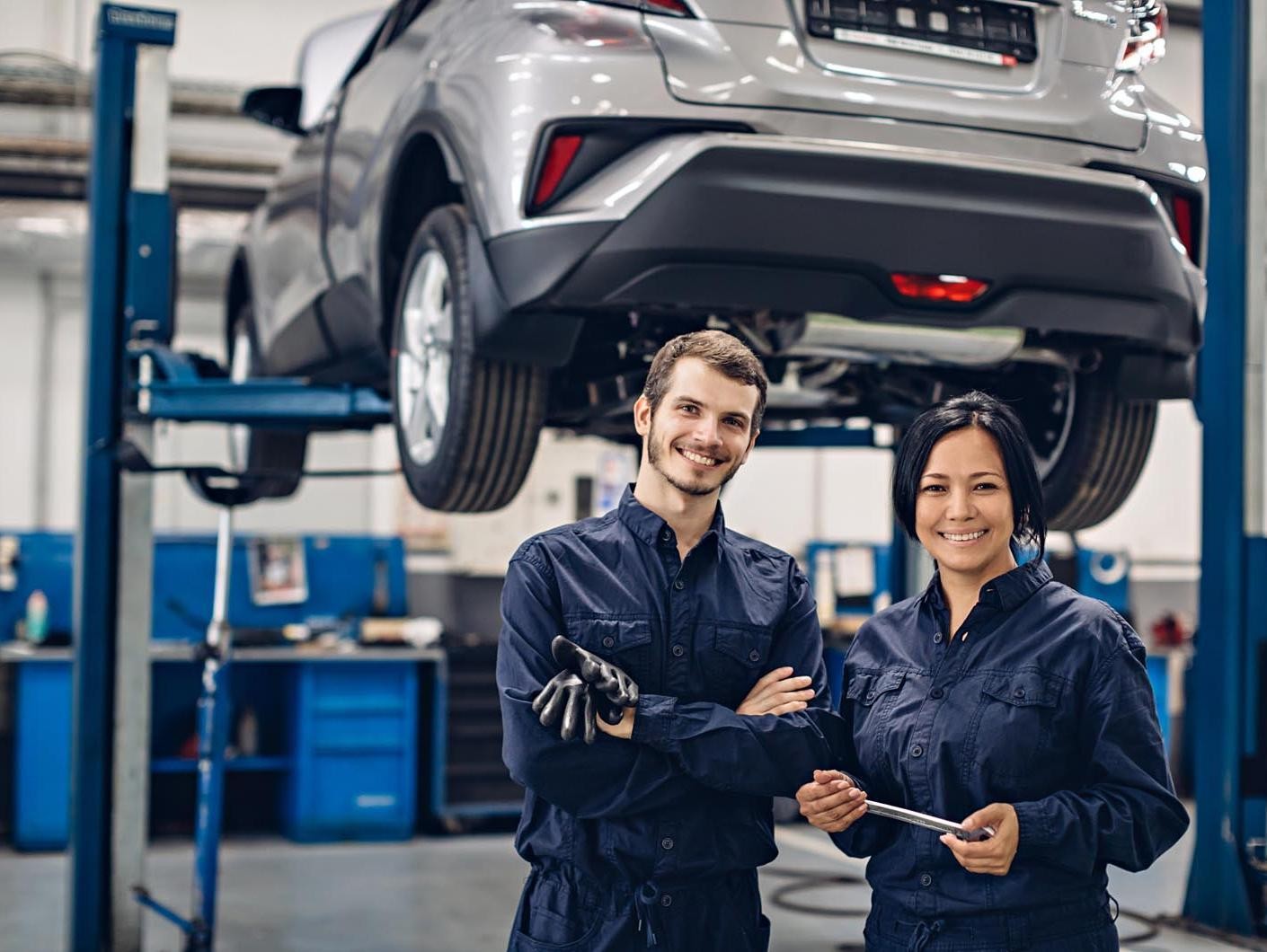
Although it’s not as glamorous a career as “celebrity chef” or “person who writes Netflix categories,” an automotive body technician is arguably more important. What would happen if either of those two professions didn’t exist? Blander food and blander streaming options.
That’s not to take anything away from the Ramsays, Flays and Rays of the world – the work they do and roles they play are invaluable to society. However, society would move on without grilled pork loin recipes; society would literally not move on without functioning vehicles.
About 90% of American adults are licensed drivers. If each of those drivers owns one car, the math comes out to be…*beep boop beep* 700 trillion 240 million vehicles on the road. And every day, there are approximately 17,000 car accidents, about half of which necessitate auto body repairs before those vehicles are safe to drive again. (Could Gordon Ramsay replace a windshield or fender on any of those millions of cars? We doubt it.)
As you start formulating your career path, why not choose to be a difference maker? Here are some reasons why a job in the auto body repair field could be a perfect match for you.
What skills do I need to be a collision repair technician?
The most important skills necessary to take on an auto body technician career are the aptitude (and passion!) to learn, a solid work ethic, and a general inclination to solve problems. Everything else can be taught with time, experience and a good core of peers, teachers and colleagues to guide you.
Overall, the skills and knowledge you’ll acquire as you seek a collision repair career will include:
- Auto body repair techniques
- Finishing and refinishing (car scratch repair)
- Customer service
- Airbag replacement
- Auto collision technology knowledge
- Repair assessments and diagnostics
- Auto body estimates and quotes
- Auto detailing
- Auto glass repair
- Time management skills
- Ability to lift heavy equipment
- Body painting
- Window tinting
- Paintless dent repair
- Welding
- Insurance claims assistance
- Vehicle and engine structure
- Safe handling of toxic or dangerous materials
- General automotive service
Is auto body work a good career path for you? Although challenging at times, an auto body career is very rewarding for those of us who are creative problem solvers with basic mechanical skills and aptitude.
Do I need to attend an auto body repair school?
Most shop employers prefer to hire people who have official auto body repair training, whether that’s through collision repair classes at a local trade school, like Northwood Tech, or hands-on experience in an auto garage. Although highly recommended, graduating from a paint and auto body school isn’t required to become a car body technician. Entry-level or auto body apprentice jobs may be available to anyone with a high school degree/GED and without formal secondary education.
New and inexperienced employees will gain on-the-job training in the shop by assisting experienced technicians perform basic skills, which can include dent removal, calculating price estimates, ordering parts, disposing of materials, and more.
To work your way up to becoming the highest paid auto body technician or paint prepper in your field, you’ll be required to complete several years of hands-on training and/or body shop classes, as well as certifications to ensure you’re competent in all pertinent technical fields. In order to continue developing their skills and knowledge, ongoing education and testing is also usually required of A-techs, especially if they wish to choose a specialization.
Should I have my own tools before accepting a collision repair job?
As an auto body mechanic or technician, you’ll be working with tools all day. Many of these tools, especially large equipment, gear in prep decks and computer systems, will be provided by your auto body shop. However, it’s a safe assumption that most collision repair jobs will require you to have your own set of tools.
Unfortunately for new and aspiring automotive body technicians, these tools can cost thousands or tens of thousands of dollars. This can certainly make an auto body repair career difficult to get into.
Many hiring auto body shops have special programs to either help their techs acquire affordable tools or provide them with tools for free. Something like our Tool Retention program is perfect for new auto body technicians and automotive service technicians alike. Simply put, when we hire an employee, we provide them with all the tools they require to perform their duties. After one year of employment, those tools are theirs to keep, regardless of their future career path.
How do I find auto body jobs near me?
Searching job postings online is one option, though it’s hardly the only (or best) way to start your career. We recommend growing relationships with professionals in the field, through your trade school or by cozying up with A-techs and paint technicians at a body shop near you. You’ll find that even the best body shops hire fresh blood constantly!
Pursuing a career in the automotive service field? Hey, everyone’s gotta start somewhere. If you happen to be looking for body shop technician jobs in Kansas City, click here to see our current openings, which include auto body techs, parts specialists, collision estimators, porters, and many more roles.
Have any questions about how McCarthy Collision Centers hire, maintain and educate our body shop employees? Feel free to give us a call at 1-800-NEW-AGAIN, or visit any of our collision center locations in Olathe, Blue Springs, Overland Park or Lee’s Summit to submit a job application.
11 Warning Signs Your Car Battery is Dying
Car batteries are notoriously fickle and some of the most volatile parts living beneath the hood. It doesn’t take much for them to go bad, and they usually only live for a few years before needing to be replaced. But when they die, they do so in glorious fashion: Like when you’re already running 20 minutes late to work, for instance. (What a terrible way to begin your day!)
Fortunately, there are numerous, unmistakable signs that your car battery is on the verge of failing. Here are the 10 most common symptoms of a dying vehicle battery.
11. “Check Engine” Dashboard Light On
The “Check Engine” light is a catch-all warning telling you something is wrong – though it may not necessarily be something related to your battery. However, it’s the most common symptom of a bad car battery. That’s why, when you bring your vehicle into a service center near you to investigate your mysterious warning light, they’ll test the battery first.
10. Engine Turns Over… Slowly
Your car engine should kick into action virtually instantly, even when it’s the middle of winter in Kansas City. If it’s slow to start – meaning engine stuttering when turning over – the issue could be related to your battery, alternator or starter.
9. Ignition Clicks
A car engine that doesn’t turn over at all is plagued by a larger issue than a slow-to-start engine. Sometimes the engine will click repeatedly while it cranks to life, which signals that there isn’t enough power being supplied by the battery.
8. Dim Headlights
Your car’s headlights will appear duller and dimmer than normal if there’s not enough power available to keep them on. You’ll sometimes notice your headlamps adjust brightness randomly or simply not turn on at all.
7. General Electrical Problems
Radios, dashboard lights, windshield wipers, and power window controls will go to Wonkytown when the auto battery is dying. Essentially, any electrical component, feature or function that isn’t working properly could be failing because of a faulty car battery that’s on its last legs.
In rare instances, especially when your vehicle is older than dirt, your electrical problems may stem from something worse than a dead battery. If this is the case, you may want to buy or lease a new car instead of messing with repairs.
6. Corroded Battery Terminals
One of the main reasons why car batteries die is because of corrosion. Battery acid will leak out at the connectors, then harden and reduce the amount of contact between terminals and connecting points. This reduces the battery’s ability to recharge via your vehicle’s alternator.
Battery corrosion will be quite visible to the naked eye; the terminals will be caked with blue-green powder or flaky residue. In some instances, cleaning your car battery terminals with a dry rag of toothbrush can extend the life of the battery. However, if you notice battery connector corrosion, it’s usually best to consider buying a new vehicle battery, just to be safe.
5. Cold Weather
Exposed to cold temperatures for an extended period, car batteries are more likely to fail prematurely. At 32 degrees Fahrenheit, car batteries will be up to 35% weaker than normal, but they’ll try to act like they’re functioning at 100% efficiency. This will cause the battery to permanently weaken over time, until it fails completely.
If your battery freezes entirely, it could be “electrically dead.” This is almost certainly a problem that can’t be repaired or recharged, so you’ll likely need to buy a new one. However, it’s important to note that most automotive batteries are capable of withstanding temperatures as low as –76 degrees Fahrenheit, so it’s unlikely that you’ll experience a frozen car battery in Kansas City.
4. Smells Bad
If you attempt to start your car and then open the hood, you may smell something similar to rotten eggs or sulfur. This is a typical sign of a leaking battery, which can be caused by old age, external damage to the battery terminals or case, or an internal short-circuit. A visit to your repair shop or auto parts store is the next step.
3. Bulging Battery Case
Extreme heat or cold will force your battery case to take on unfamiliar shapes. They may bulge and swell – this can be dangerous! – or crack, leaking battery acid out. Any automobile battery that’s not rectangularly shaped should be properly discarded (i.e., recycled – ask your auto repair or collision repair shop to help you recycle your old car battery).
2. Old Age
Most car batteries, with the exception of electric vehicle batteries, will only live for three to five years, depending on driving conditions and regional temperatures. Do you remember the last time you replaced yours? Check the battery’s manufactured date on the case; If it’s been at least four years since the battery was built, have it tested.
1. Car Accidents
Even a small front-end collision can rattle your battery cables loose or damage the battery case. You may not even realize there’s a problem right away! Your vehicle battery could die tomorrow, next week or a month down the line. That’s why it’s important to always get an inspection and estimate following a minor car crash. You never know!
Diagnosing a dead or dying battery can be difficult, leaving you flustered, frustrated, and unsure of what to do next. Is the battery in need of a jump-start because you left the lights on or door ajar overnight? Or is there a more sinister reason why your battery’s as lifeless as a doornail? In some cases, you may need to speak to an expert for assistance.
If your battery’s seemingly gone kaput, and you happen to live in the Kansas City area, visit a McCarthy service center or one of our autobody shops in Kansas or Missouri. Although we perform collision repairs, we would be happy to help you with your dead battery, alternator, spark plugs, or solenoids.
Need a tow? Call 1-800-NEW-AGAIN to request a tow truck. We’ll haul you to your nearest McCarthy Collision Centers location (Olathe, Blue Springs, Overland Park or Lee’s Summit) and take a look under the hood.
Connect with us


- October 2025
- September 2025
- August 2025
- July 2025
- June 2025
- March 2025
- February 2025
- January 2025
- December 2024
- November 2024
- September 2024
- August 2024
- July 2024
- June 2024
- May 2024
- March 2024
- January 2024
- December 2023
- November 2023
- October 2023
- June 2023
- April 2023
- February 2023
- January 2023
- December 2022
- October 2022
- September 2022
- August 2022
- June 2022
- May 2022
- April 2022
- March 2022
- February 2022
- January 2022
- December 2021
- November 2021
- October 2021
- September 2021
- August 2021
- July 2021
- May 2021
- April 2021
- December 2020
- August 2019
- June 2019
- March 2019
- November 2018
- February 2018
- November 2017
- August 2017
- July 2017