

Whether you get into a car accident near your Kansas City home or halfway across the country, the stress can seem unbearable. However, being in a car accident during a road trip throws new wrenches into the machine called “your family vacation.” Finding yourself stranded in a strange town, bruised and achy, and without a vehicle? Talk about a stressful situation!
Breathe deep, young Padawan—you’ll get past the ordeal by following our “Tow or No?” guide, as well as the sage advice below.
1. Get a Police Report
A common practice when you get into a car crash near home, acquiring a police report is even more important when you get into a collision on vacation. A detailed report of the scene could prove to be a vital piece of evidence if you ever go to court or seek payment from the other driver’s insurance company.
Once an officer has been sent to the accident scene, don’t admit fault or blame, and be sure to ask questions as to their processes and analyses. If something seems peculiar or you feel as though you’re not being treated respectfully, record all interactions with your handy smartphone.
2. Check State Insurance Laws
States define their own laws regarding auto insurance. For instance, Kansas is a no-fault state, which means that your own insurance will pay for damages to you and your vehicle after a crash. Cross the Kansas City line into Missouri, and you’re in an at-fault state, which means that the driver responsible for the car crash must pay, usually via their insurance carrier.
This can drastically change the way in which you speak to your insurance company and file a claim. Check the state’s insurance laws at www.dmv.org before contacting your agent.
3. Call Your Insurance Company
While most of us have love-hate relationships with our auto insurance companies, in situations such as these, the claims agents are on your side. Oftentimes, when an accident occurs away from your home, car insurance adjusters will seek to expedite claims, helping to alleviate some of your anxieties.
Your insurance company can also connect you with a contracted collision repair center near the crash. Because insurance won’t typically pay for a vehicle to be towed back to your hometown auto body shop, using a local body repair center is the best and easiest option. In addition to simplicity, having an insurance-approved collision center work on your car ensures your repairs are under warranty; should any issues occur down the line, you are likely covered.
Always check with your insurance agent for more details about collision repair warranties and your policy in general. (And if you need car accident repairs in Kansas City, tell your agent that your vehicle is in the capable hands of our McCarthy Collision Centers.)
4. Deal with a Totaled Car on Vacation
If the accident is severe enough, your car may be towed to a salvage yard and deemed totaled or unsalvageable. Bummer. In order to receive an insurance payout, you’ll want to make arrangements to stick around and sign away the title. Left too long at the junkyard, your vehicle may accrue “storage” charges that must be paid out of your pocket. Though, if you’ve been hospitalized, insurance companies will usually refund or pay these fees altogether.
Before handing over the title, you’ll need to go through all your belongings—this is where most people begin to panic—and find a way to store everything. If you have a rental car, you’ve got a rental trunk. ‘Nuff said. Otherwise, pack boxes and ship everything home via USPS, UPS, FedEx, or another service. Don’t leave anything to chance—most states have no laws requiring salvage yards, tow companies, or insurers to properly dispose of any personal information found.
Rather not leave your beloved car in a junkyard? You have the right to take it home, busted grille and all. The logistics can get messy if you go this route, but there are several creative options at your disposal:
- Rent a U-Haul and tow it home on a trailer.
- Hire a car transporter like uShip.
- Buy a cheap used truck to tow it, then sell the truck to a used car dealer back home.
- Put out a Craigslist ad to request a tow, with payment made on delivery.
- Invent a teleportation pod and zap it into your garage.
5. Hire a Local Lawyer
Since insurance and traffic laws vary by state, you should consider hiring a lawyer within the state in which you had the accident. Their familiarity with the state laws makes them more capable of handling your case if it ever progresses that far. Of course, you have the right to choose a lawyer from your home state, or no lawyer at all – though this isn’t recommended.
6. Cut Your Vacation Short
While it isn’t the ideal scenario, ending your road trip early might be best. If that’s the case, be sure to track all your expenses, including costs paid for flights, buses, taxis, and rental cars. You’ll want to have receipts to have a chance of getting reimbursed by insurance.
Quality Kansas City Auto Body Repair is a Phone Call Away
Dealing with a car accident during your road trip was not on the agenda. With some quick thinking and support from your insurance company, you’ll hopefully be able to continue your adventure with relative ease. For quality collision repair near Kansas City, dial 1-800-NEW-AGAIN to get your car towed to one of our auto body shops. With 5 locations throughout the Kansas and Missouri areas of Kansas City, our McCarthy Collision Centers are here to help by offering free estimates, unbeatable prices, and the best customer service you could ask for.

When is the last time you thought about your car’s front and rear bumpers? We’re guessing maybe never. If you did, you may be thinking: “Hey, bumpers will protect my car from getting seriously damaged if I get into a simple fender-bender, right? No biggie. Probably just a couple hundred bucks’ worth of damage.”
Sorry. Wrong answer. Rather than the sturdy and virtually indestructible pieces of automotive hardware you might think they are, bumpers may not protect your car from costly damage, even if the fender-bender is at 10 mph or less. Let’s find out why.
Regulatory Gap Causes Bumper-Height Mismatch
The federal government mandates that all passenger cars have a bumper height between 16 and 20 inches above the road surface and be able to withstand a 2.5 mph impact without damage to lights or other safety equipment. The idea is that if two vehicles with similar bumper heights strike one another at low speed, their bumpers should help to absorb the impact to lessen the damage.
But there are no such federal guidelines for SUV bumper height. That’s because SUVs were originally designed to be off-road vehicles, exempting them from federal bumper-height standards. With the soaring popularity of SUVs, the chance of collisions between SUVs and passenger cars has dramatically increased. This bumper-height regulatory gap also applies to trucks and minivans, which are also exempt from federal oversight in this area.
IIHS Crash Tests Demonstrate Damage
The Insurance Institute for Highway Safety (IIHS) regularly conducts crash tests on passenger cars and SUVs. By crashing cars and SUVs into one another in a controlled test environment, IIHS researchers determined how mismatched car and SUV bumper heights can cause significant damage in the thousands of dollars.
Several years ago, the IIHS selected seven pairs of SUVs and passenger cars from the same manufacturers to demonstrate that, even when manufacturers have control over bumper heights on their own models, the damage resulting from mismatched bumper heights is considerable.
The testers paired up sets of cars and SUVs from each manufacturer and crashed them into one another at a speed of 10 mph. They would first crash the SUV into the rear of a stationary car and then reverse the process by crashing a car into the rear-end of a stationary SUV.
What they found was this: Like two mismatched prizefighters, when a car’s lower bumper impacts an SUV’s higher bumper or vice-versa, the SUVs bumper will “KO” the car’s bumper, causing extensive damage to hoods, cooling systems, headlights, taillights, bumper, fascia, and more. In many cases, the car’s lower bumper height will let the SUVs higher bumper ride over the top of the car’s bumper, exacting extensive damage as a result.
But don’t think that because SUVs are bigger and have higher bumpers that they have lesser damage or escape unscathed. That’s because when car and SUV bumpers don’t line up properly, they can’t do their job of absorbing the brunt of the impact. Additionally, since there are federal SUV bumper regulations, car manufacturers are free to equip their SUVs with bumpers that flimsy and inadequate.
Tests Reveal The Hidden Costs of Fender-Benders
These extensive laboratory crash tests on mismatched SUV and passenger-car bumpers revealed the shocking hidden costs of fender-benders. Depending on the make and model, estimated repairs ranged from a low of $850 to a high of $6,015. In one instance, the total cost of estimated repairs to both vehicles was close to $10,000. Average repair costs were in the $1,200 to $4,500 range. In some cases, vehicles were damaged to the point that they were undrivable.
Bear in mind that these tests were conducted in 2010, so it’s likely that repair costs have increased significantly since then.
“SUVs and cars share the road,” explains IIHS Chief Administrative Officer Joe Nolan. “The problem is that they don’t share the same bumper rules, and consumers end up paying the price.”
(If you want to see just how much “car-nage” [pun intended] these car crash tests can cause, check out our “10 Most Insane Car Crash Test Videos” blog here.)
Beat The High Cost of Kansas City Fender-Benders
As we’ve seen, mismatched car and SUV bumpers can turn a simple fender-bender into an expensive repair job costing thousands of dollars.
Unfortunately, there’s no regulatory remedy to this growing car vs SUV bumper-mismatch problem on the horizon. But you can still help beat the high cost of fender-bender repairs near Overland Park, KS by taking your vehicle to one of our five conveniently located McCarthy Collision Centers in the greater Kansas City area.
If you’ve unfortunately been involved in a Kansas City car accident and are looking for a reputable auto body shop near Blue Spring, MO, rest assured that the collision-repair pros at McCarthy Collision Centers will get you back on the road again for less.
Our skilled and highly trained technicians at our McCarthy auto repair shops in Blue Springs, Olathe, Overland Park, and Lee’s Summit use the latest technology to return your vehicle to “like-new” condition.
If you’ve been involved in a car accident, we understand how traumatic and disruptive this event can be. That’s why we offer you the peace of mind of our limited lifetime warranty on all repairs.
Don’t worry about dealing with insurance because we’ve got you covered. We work with all insurance companies and are a direct repair facility for most insurance companies. We offer insurance claim assistance, free online auto repair estimates, and you can easily schedule a repair appointment online at any of our McCarthy Collision Centers. We also partner with several reputable Kansas City towing services for around-the-clock towing day or night.
Beat the high price of fender-bender repairs in Kansas City by contacting your nearest McCarthy Collision Center at 1-800-NEW-AGAIN (800-639-2424). Or visit us online at 800newagain.com.
Getting into a car crash can be the most terrifying experience of your life. Luckily, the odds that you’ll be in a vehicle accident are just 1 in 366 for every 1,000 miles you drive. (Hey, that’s not so bad!) However, as that odometer ticks up, so too do those odds; Esurance reports that about 77% of drivers will get into an auto collision at some point, so you’d really need the luck of the Irish to find yourself in the minority. (Hey, now I’m terrified again!)
We feel that knowing the data behind vehicle crashes helps alleviate (some) those fears. So, we’ve gathered the most unusual and incredible car accident statistics for you to hopefully get out of your own head and back on the road with confidence. Some of them are sobering. Some of them are eye-opening. All of them are true. Let’s get started.

- Just 5% of all car crashes results in a fatality.
- The incorporation of new car safety features over the last decade has reduced the rate of car crashes by 12% and fatalities by 22%.
- During the first nine months of the 2020 pandemic, traffic fatalities rose by nearly 5%, but overall travel dropped by 15% and the number of car crashes decreased by an estimated 35%.
- Nearly 85,000 vehicles illegally pass school buses every year. (Please report these people! Check here for resources and contact information.)
- Almost 60% of deadly car accidents involve just one vehicle.
- Having the common cold can reduce your driving reaction times to that of a drunk driver (BAC of 0.08%).
- An estimated 20% of drivers report to putting on makeup, grooming their hair and/or shaving while driving.
- Conservative estimates note that annual police-reported DUIs represent just 1% of the over 110 million self-reported drunk drivers who were never arrested.
- The economic costs associated with automobile crashes in the U.S. is estimated to be somewhere between $300-400 billion.
- About 50% of all fatal car crashes occurred in rural areas.
- There are over 6 million car crashes per year, or about 16,500 collisions per day, in the U.S.
- Over 90 people die in automobile accidents each day, resulting in nearly 40,000 deaths per year.
- Each year, 2 million people are permanently injured or disabled due to vehicle crashes.
- California and Texas see the most fatal car crashes, at 3,200 and 3,300 per year, respectively; Vermont and D.C. see the fewest, at 60 and 30, respectively. (Missouri and Kansas sit near the middle, with 900 and 700 fatal vehicle collisions per year, respectively.)
- Weekends are the most dangerous times to drive.
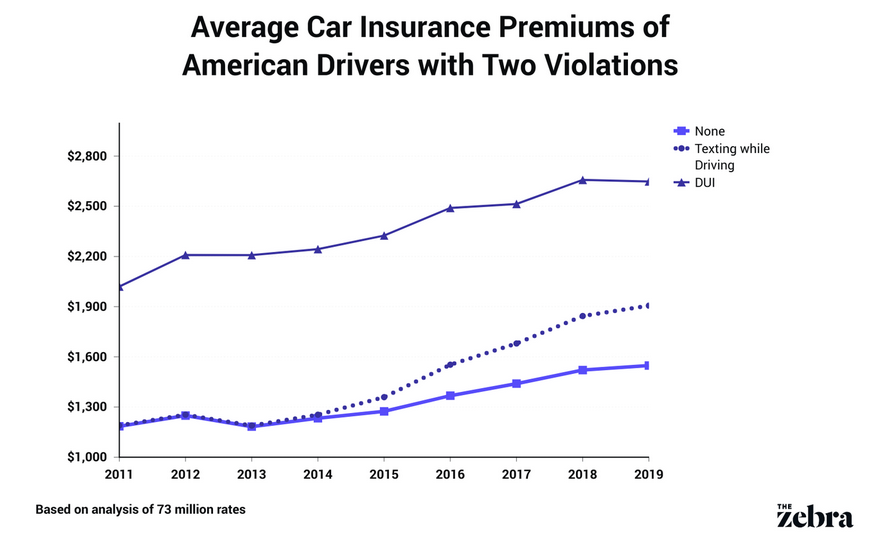
- Driving 10 mph over the speed limit increases crash risk by 10%, but driving 10 mph under the speed limit increases crash risk by 15%.
- Almost 60% of pickup truck drivers who are killed in crashes do not wear seat belts.
- There is strong evidence to suggest that shorter and lighter-weight drivers are more likely to sustain crash-related injuries.
- Approximately 15,000 car accidents and 7,500 related fatalities per year are caused by “drowsy driving” or a driver who’s fallen asleep at the wheel.
- One out of five car accidents are caused by cell phone use/texting.
- You’re 23 times more likely to get in a crash when you drive while handling a mobile device.
- Speeding accounts for over 10,000 fatalities per year, or 30% of all traffic-related deaths.
- The most common locations for a minor car accident are parking lots and at stop signs.
- The most common locations for a major car accident are rural highways and busy intersections.
- U.S. fatal car accidents on highways are 3.5 times higher than in the UK.
- Child safety seats save over 300 lives per year. (Read more about Kansas’s child safety seat laws.)
- About 10 million annual car crashes are never reported.
- Driving while intoxicated is the most dangerous thing you can do behind the wheel, as you’re 36 times more likely to get in a crash.
- Did you know that drunk driving accounts for approximately one car-crash death every 48 minutes in America – or 30% of all motor vehicle fatalities?
- Driving drunk causes about 30 deaths per day and over 11,000 deaths annually – and that’s not even counting the 800 daily and 300,000 annual injuries.
- If those stats aren’t sobering to you, maybe you can let your personal bank account know that getting a DUI also comes with a possible fine of up to $1,000 in Kansas (or upwards of $10,000 federally) and can increase car insurance premiums by roughly 70%. Got more than one DUI? You’re looking at average insurance premium increases of over $1,000 per month. Yikes.
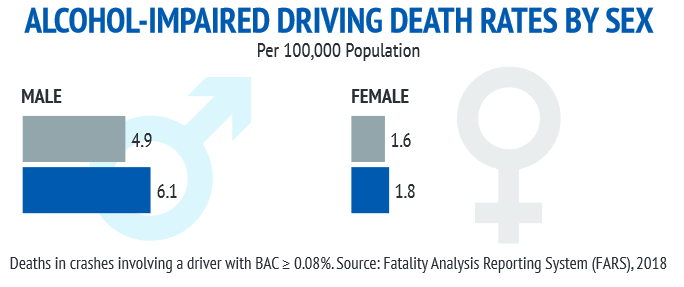
- Between the hours of 9 p.m. and 6:00 a.m., nearly 50% of all vehicle-related pedestrian deaths involve someone with a BAC of over 0.08%.
- About 60% of American drivers will be involved in an alcohol-related car accident at some point.
- Over 50% of drunk drivers will be between the age of 21 and 34 years old.
- America’s yearly cost of alcohol-related car accidents – this includes the treatment of injuries, autobody repairs near you, property damage, and fatality services, to name a few – is more than $60 billion.
- Icy or snowy road conditions account for about 160,000 vehicle crashes each year/winter. (Read more about how to handle an accident caused by ice.)
- The average auto liability claim for property damage is over $3,500; for bodily injuries, the claim amount is close to $20,000.
- Compared to women, men are 300% more likely to die in a drunk-driving related crash.23) The most common cause of fatality by motor vehicle is drunk driving, followed by distracted driving and speeding.
- US Highway 24, through Jackson County, Missouri, has one of the highest crash rates (19.09) in the Midwest.
- Getting rear-ended is the most common type of car crash in America (29% of all crashes). In fact, our Kansas City body shops perform more rear-end repairs (e.g. bumper/fender replacements, fixing trunk lids, and correcting bent frames) than virtually any other type of major collision repair service.
- What’s the deadliest day to drive? You’d think it would be St. Patrick’s Day, but it’s not. The most dangerous day for drivers is August 2, per IIHS data.
But if the luck of the Irish isn’t on your side and you do get into a minor fender-bender or car accident with a drunk driver in Kansas City, we might be able to lend a hand. Call us at 800-NEW-AGAIN to request a tow to your nearest McCarthy body shop. We’ll assess the damage for free, help you make an insurance claim, and get you back on the road. And if the car is considered totaled, we’ll help you get the most money out of it. Safe driving!
Here at McCarthy Collision Centers, you preferred choice for auto repair in Kansas City, we want to help you avoid an accident and potential costly repairs to your vehicle. Faulty brakes, tire blowouts, electrical problems, and even engine failure can all lead to a serious accident you could have avoided with proper vehicle maintenance.
So our collision specialists here at our Kansas City collision centers put together the following “10 Maintenance Musts” to help ensure that your car is best equipped to help you handle whatever road hazards come your way.
1. Check Your Electrical System
A bad battery can leave you stranded, and a faulty electrical system could cause your car to stall or operate incorrectly when driving. Check your battery terminals for corrosion and look for cracks in the wiring. You can also take your car to one of our convenient McCarthy Collision Centers in Kansas City, and we’ll inspect your electrical system for you.
2. Inspect Your Car’s Wiper Blades
Clear visibility is a must for safe driving. Wiper blades wear out over time, so inspect your blades and look for cracks, frays, stiffness, or wear and replace if necessary. And keep your wiper fluid topped off with windshield washer fluid that’s designed to help remove bugs and eliminate streaking.
3. Check Your Tires
Rain, ice, snow, and other winter weather conditions make driving more dangerous. Tires are your first line of defense when it comes to avoiding accidents. It’s important, therefore, to carefully inspect your tires for any problems that could cause a blowout or make you lose control of your car. Inspect your tires for uneven wear, cracks in the sidewall, or other issues that may require rotation, alignment, or replacement. It’s common for tires to lose air pressure when the weather gets colder. So you need to keep your tires properly inflated to manufacturer’s recommendations.
4. Service Your All-Wheel Drive
If your car comes with all-wheel-drive (AWD), you must regularly maintain it, so it continues to work properly. You don’t want it failing on you when you need it the most. Our five McCarthy auto repair shops located throughout Kansas City can perform this important maintenance.
5. Check Your Antifreeze
Underperforming antifreeze could make your car’s engine have problems when the cold weather hits. This issue could also affect your heater and defroster. Avoid these possibilities by making sure that you are using the correct antifreeze for your car. Look at the plastic reservoir and never take the radiator cap off when the engine is hot to avoid possible injury.
6. Check Hoses And Belts For Wear
Rubber gets brittle over time. This fact is especially true in areas like Kansas City where freezing temperatures speed up this process. Look for any signs of wear, such as frayed belts, cracks, or soft spots in hoses. Not only are bad belts and hoses dangerous, but they can cause extensive engine damage if this fail.
7. Regularly Check All Fluids
Oil, transmission, power steering, and brake fluids are the lifeblood of your vehicle. Many newer cars have clear or opaque reservoirs for brake and power steering fluid. These make it fairly easy for you to check the fluid levels. If you fill these yourself, use a clean, unopened container to avoid contamination.
Dirty oil or low oil and transmission fluid levels can affect how your engine performs and lead to premature wear, resulting in costly repairs. Avoid this by checking your oil at least once a month and follow the recommended oil and transmission fluid change schedule that you’ll find in your car’s service manual. Take your car to a reputable Kansas City repair shop, such as one of our five McCarthy auto service centers conveniently located throughout the KC metro area, who can perform these key maintenance items.
8. Check Your Brakes
Along with your tires, brakes are vital to vehicle safety. This fact is especially true in wet, icy or snowy weather. Worn brake pads can damage rotors, leading to expensive repairs. Fluid leaks and other problems could lead to catastrophic brake failure and a potentially deadly accident.
9. Replace The Air Filter
A dirty air filter robs your engine of performance and leads to poor gas mileage. Make sure you have the power you need when you need it. Air filters are pretty easy to change yourself. However, if you would rather have the pros do it, please take your car to one of our five McCarthy Auto Group dealerships here in Kansas City.
10. Keep Your Lights In Good Working Order
Headlights, taillights, and turn signals are also critical to avoiding accidents. Burnt-out bulbs, misaligned headlights, and malfunctioning brake lights are a recipe for trouble; especially when bad weather obscures visibility. Do a “walk-around” of your vehicle and make sure your lights are in good working order.
McCarthy Collision Centers Care About You – And Your Car
We want you to stay safe and avoid accidents on our Kansas City roadways. So we hope you will take the time to follow these 10 important vehicle safety maintenance tips. When you maintain your car in good running condition, it will help you avoid a costly and possibly deadly accident.
If you, unfortunately, are involved in an accident, it’s good to know that you can take your car to one of our certified collision repair facilities in Blue Springs, Olathe, Overland Park, or Lee’s Summit. Let our skilled and highly trained technicians use the latest, state-of-the-art technology to return your car to “like new” condition and get you back on the road. We repair all makes and models of vehicles.
At all our McCarthy Collision Centers, we offer a limited lifetime warranty on all repairs. We also work with all insurance companies and are a direct repair facility for many insurance carriers. We offer free estimates, insurance claims assistance and make it easy to schedule an appointment online at any one of our locations.
For more information, please call 800 NEW AGAIN (800-639-2424).
Sources:
9 Ways to Winterize Your Car
http://www.carcare.org/2013/09/five-tips-for-fall-car-care-month/
We know that overexposure to UV rays can be harmful to our skin—peeling sunburns are nothing compared to cancer—but the sun can also cause significant damage to your car’s paint. Oxidized auto paint looks dull, like matte-finished chalk, and opens the window for rust to build up on the sheet metal. Once that happens, your car may never look the same, even with a full coat of new car paint from a certified body shop.
As is the case with your skin, prevention is key if you’re going to protect your car paint from the sun. Here are a few expert tips to prevent sun damage from eating away at your vehicle’s luscious exterior.
Keep Your Car Parked In The Shade
If you can’t park in the garage or a shaded carport 24/7, seek shelter under a tree canopy. (Heck, even a wimpy sapling tree can help protect your car from UV damage by up to 30%.) Your vehicle’s glossy paint may get tree sap and bird droppings on it, but that’s a small price to pay to keep it glossy far into the future.
Wax On, Wax Off (& Repeat)
Safeguarding your car’s paint from sun damage is a multi-prong approach. First, you prevent (park in shade). Then, you protect (wax). Our collision centers in Kansas City advise you to apply a high-quality car wax at least twice per year, preferably before and after winter. However, waxing your car every season wouldn’t hurt anything but your wallet.
Why wax your car to prevent sun damage? A good car wax locks in the natural (and unnatural) oils inside the auto paint, provides a UV barricade, prevents pitting, and protects against other caustic agents, such as road salt, which may harm the car’s exterior.
Here’s a useful tip: wax your car in the shade! Direct sunlight, as we’ve already discussed, should be avoided when your vehicle is without a protective film of car wax. (And don’t forget to apply an appropriate film to protect any rubber elements on your car, which can crack and peel due to the sun.)
Wash Your Car—A Lot
The third prong is continued maintenance (car wash). If you do keep your car parked under trees, the bird number-twos and tree sap should be removed ASAP; if left exposed to direct UV rays and heat for too long, that sap and bird doodoo can actually disintegrate the natural finish of your car’s paint, causing permanent stains.
Our Kansas City body shops recommend hand-washing your car, especially during the summer. Use gentle soap and clean water to remove the small particulates that build up on your car’s paint, such as dirt, sand, and bug guts. Always wash with a clean sponge and microfiber cloth, and immediately dry, by hand, in the shade.
But in instances where you are frequently parking beneath trees, it may be worth it to invest in a membership at a local car wash. Your time is important, after all.
Get A Quote For Sun Damage Restoration By Auto Body Experts
If your three-pronged attack to negate the sun’s rays doesn’t work, a trip to your local auto body shop might be a wise decision. For instance, our Kansas City collision repair centers will provide you with a free inspection and an accurate quote to repaint or refinish your car, as well as tips to help prevent sun damage in the future. We even offer complete auto detailing services to rehab cracked dashboards, peeling leather, and sun-stained cloth seats.
Find a Kansas City collision center and car body shop near you to get started with your sun damage repairs, or simply call 1-800-NEW-AGAIN to speak with a specialist at one of our McCarthy Collision Centers. Tell that sun who’s really the boss.
Sources:
https://www.azsunblock.com/how-does-the-sun-damage-car-paint/
Post Car Repair Do’s & Don’ts
You’ve been in an accident and sustained significant damage to your vehicle. Fortunately, you did the right thing and took your car to one of our convenient auto body repair shops in Kansas City, or to our collision repair shop in Sedalia, MO. Our expert technicians made the necessary repairs using our state-of-the-art technology. The result is your car looks and drives like new.
But just like coming home after major surgery, your car also needs some “TLC” and recuperation after you get it home from one of our Kansas City auto body shops. You shouldn’t have any problems with the mechanical and structural repairs to your car. Most likely, either all or part of your car was repainted, and that’s where you need to pay particular attention.
According to McCarthy Collision Centers’ auto body repair experts, it’s important to baby your car’s new post-repair paint job. They’ve come up with the following list of post auto-repair “do’s and don’ts” that you should follow to protect your newly painted car once you get your home from one of our Kansas City Collision Centers.
Do This:
Do Wash Your Car By Hand – Because the new paint and finish need to dry and harden, you should take care washing it for a minimum of three months after it’s been painted. Use a very mild car wash solution and a soft cloth or sponge to wash and a chamois to dry. Use cool, clean water, not hot.
Do Wash Your Car In The Shade – Don’t let the surface dry out or get too hot by keeping it wet and washing your car in the shade.
Do Dry Your Car Thoroughly – If water is allowed to dry on the surface, it will cause unsightly and permanent water marks that will mar the finish.
Do Keep Your Car In The Garage – It’s always a good idea to keep your car in the garage. But this is particularly the case after it’s been painted. Extreme heat or cold can cause weather-related damage. If you don’t have a garage, consider getting a portable awning or car cover if kept outside.
Do Get Your Car Professionally Detailed – Let the professionals detail your car properly at least twice a year. Be sure to tell them that your car was recently painted so they can take the necessary care.
Don’t Do This:
Don’t Wax or Polish Your Car for Three Months – Wait at least three months before waxing and polishing your car as doing so will possibly damage the finish or discolor the paint. The paint job needs to “cure” for some time before you can go back to waxing and polishing it. After waiting three months or longer, you can carefully apply a new coat of carnauba wax to protect it.
Don’t Dry Wipe Your Car – It may be tempting to take a dry cloth and wipe off the dust, but this could scratch the new paint which is still quite fragile. You should also avoid using a stiff brush or anything rough that could scratch the surface.
Don’t Run Your Car Through A Car Wash – Many neighborhood drive-through car washes use stiff brushes and other materials that will definitely scratch and damage your paint. This will cause the finish to lose its lustrous shine quickly
Don’t Park Under Trees Or Power Lines – Tree sap and bird droppings will eat right through the new paint job. It’s just a sound practice to avoid doing this if at all possible. If you do happen to get some bird droppings or sap on the finish, clean it off promptly and carefully as the acidity will eat right through the new paint.
Don’t Scrape Off Ice Or Snow – Taking a hard plastic scraper to your new paint job is asking for trouble. The tool can potentially scrape some of the paint off. If you can, try to use your hand or a soft brush to remove excess snow.
Don’t Use Dish Or Clothing Detergent – Avoid the temptation to grab that bottle of dish soap or laundry detergent to wash your newly painted car. These soaps leave harmful residues and are too strong for your vehicle’s finish, permanently dulling it. This is particularly the case with new paint jobs which cannot tolerate harsh soaps. Always use a car wash solution that is made for vehicles, not dishes or clothes.
Don’t Spill Harsh Chemicals – You should avoid spilling chemicals on any car’s surface in the first place. But new paint jobs are particularly vulnerable to any harsh chemicals or fluids. Be cautious adding oil, transmission fluid, or antifreeze. Use care when filling your car with gas. Even windshield washer fluid can damage new paint. If you do, wipe off immediately with a soft wet cloth or sponge (not dry) and try to wash the affected area thoroughly as soon as possible.
Don’t Drive On Dirt Or Gravel Roads – Living or driving in rural areas may make it tough to avoid driving on gravel or dirt roads. But try not to drive on these roads or near construction sites if at all possible. Since the new paint is still hardening, it’s very susceptible to chipping.
By following these do’s and don’ts, your car will continue to look and drive like new for many miles down the road.
We Care For Your Car As Much As You Do
Nobody cares for your car quite like you do. At McCarthy Collision Centers, we believe in treating your “baby” like it was our own. Our highly trained staff of certified technicians have a combined 173 years of experience. Plus, we’ve been in business since 1999 and have a solid reputation for doing quality repair work that you can count on. Our goal is always to return your vehicle in as close to “like new” condition as possible.
We feature only the latest equipment in our clean and modern facilities. Some of our many auto body repair services include airbag replacement, paintless dent repair, wheel alignment, and glass repair. We also use advanced technology to restore frames and unibody rails to their previous condition.
We stand behind our work and offer a limited lifetime warranty that covers both the repairs and the parts. We also make it easy for you by letting you schedule a service appointment or register online for a free, no-obligation automotive repair estimate at any of our five McCarthy Collision Centers in Kansas City and Sedalia. For more information, please contact a McCarthy Collision Center near you, or call 1-800-NEW AGAIN (800-639-2424).
Sources:
http://gmbodyinc.net/dos-and-donts.htm
http://www.royalcollision.com/blog/index.php/how-to-treat-your-car-once-its-out-of-an-auto-body-shop/
http://www.bodyshopanaheim.com/body-repair/how-do-i-care-for-my-paint-after-auto-body-repairs/
http://autocollisionutah.com/caring-car-paint-job/
http://www.advancedautobodysc.com/blog/car-care-tips-post-autobody-repair
Signs Your Car Headlights Need to be Replaced
You don’t often think about your car’s headlights—until they stop working. At that point, it may feel like you’re up a creek without a paddle. However, there are some telltale signs that your headlamps are about to burn out. Keep an eye out for these symptoms of a dying headlight, and you should have enough time to remedy the problem before you’re left in the dark.
Flickering Headlights
Like a candle in the wind, your car’s headlights might flicker on and off at random. This is a common first sign that the headlight bulbs are done for. Excessive use of headlights over a prolonged period of time will wear down the bulb’s filament. Usually, your headlight will quit working very shortly after you begin noticing the flickering.
Another reason for headlights to flicker on and off: a bad harness or faulty battery connection. If you purchased the vehicle new just 3 years ago, for instance, it’s unlikely your headlight bulb needs to be replaced. Instead, you should check for a loose connection at the battery terminals. If that doesn’t solve it, bring your vehicle to a service center for an inspection. Your vehicle’s warranty may even cover the headlight repairs, so act as soon as possible to take advantage of it.
Dim Headlamps
You notice your once-bright headlights are now dimmer. Perhaps they’re working, but with infrequent and varying degrees of luminosity–until one day they just fizzle out and go kaput.
Headlamp bulbs — particularly older filament-type bulbs – can lose their brightness and appear dimmer over time. This is a clear indication that you’ll need to replace the bulb soon.
Dim headlights can also be caused by a corroded ground wire. To identify if this is the problem, follow the ground wire from the back of the headlight assembly and wiring harness to its origin. If anything looks corroded, you’ll have to bring your vehicle to an auto body shop for service.
Constantly Blowing Fuses
If you find that your headlight bulbs constantly burn down, it can be a symptom of a larger, more complex electrical problem. Fuses can blow out because of faulty headlight bulbs or bulbs that do not have the correct wattage. You’ll need to check the lighting switch, headlight assembly, fuses, and any exposed wires in the harness.
High beams can also be the culprit; if you’ve recently replaced the bulbs in your car’s high beams, crosscheck that bulb’s wattage to what’s recommended in your vehicle’s manual. If everything matches up, perhaps there was an issue with how the bulb was installed. Either way, it’s best to seek out a professional technician for assistance.
Low-Beams Don’t Work, But High-Beams Do
You can troubleshoot this by swapping a high-beam bulb with a low-beam bulb. If the low-beam bulb works after the swap, you have a culprit: the bulb.
If that doesn’t work, you’re probably looking at a blown fuse. Check the electrical area for melted wires, loose connections, or burnt fuses. You can also test the headlight wiring with a voltage multimeter.
Other Common Headlight Questions & Answers
Where do I go to get my headlight bulb replaced?
If you’re handy, you can replace your headlight assembly and bulb at home. However, most people will want
to go to a service center or auto body shop for peace of mind.If you need headlight replacement in Kansas City, visit your nearest McCarthy Collision Center.
Can I restore plastic headlight lenses?
Yes, you can renew plastic headlamp covers. When your vehicle’s headlights start to get dimmer or duller, it might not be the bulb; rather, it could be an old headlamp lens. Lenses for headlights can become yellow, cloudy, murky, or full of condensation, which will reduce headlight brightness. A headlight restoration kit helps, but we suggest having an automotive repair technician install a new headlight assembly made of quality plastic or a similar material.
Can you get a ticket for driving with a broken car headlight?
Yes—100% yes. By law, you are required to operate a vehicle at night with at least two working headlamps. No matter the reason for your broken headlight, police will absolutely pull you over and give you a warning or ticket. It is a minor traffic violation, but a ticket is a ticket.
Is it safe to tape up a broken headlight or taillight?
Unless absolutely necessary to provide light, putting tape on your headlight is not recommended. Bulbs can get fairly hot—hot enough to melt poor-quality tape.
However, it’s also not recommended to operate a vehicle without a headlight lens as the bulb may be too bright for passing drivers. The only safe solution is to avoid driving at night – and get your lens replaced as soon as possible.
Is it safe to install used or cheap headlight assembly kits?
Our Kansas City collision centers do not recommend installing salvaged, pre-owned or otherwise cheap headlight harnesses or assemblies. Old, corroded, or poor-quality wiring can be a fire hazard.
How much does it cost to replace a smashed headlight?
Repairing a smashed headlight is usually quite simple and cheap and can be performed by a professional in a matter of hours. However, your mileage may vary when it comes to headlight repair. If you have an exotic vehicle, for instance, or want to install an aftermarket headlamp, prices will climb. Ask your auto body repair technician if you have any concerns.
About McCarthy Collision Centers in KS & MO
Since 1999, our collision repair shops have assisted drivers throughout the Kansas City region. We’re the full-service collision center Kansas City residents trust to provide everything from complete auto body restoration to broken headlight repair. To receive a free quote or more info about any of our services, or to schedule an appointment at one of our body shops, call us at 800-NEW-AGAIN.
Curb, meet wheel. Wheel, meet curb.
Although they’re bound to be together like Ross and Rachel, introducing your car’s hubcap to the curb is certainly not in your wallet’s best interest. Hitting a curb can do some nasty damage to your tires, let alone other vehicle components including the suspension. Even striking one at turtle-like speed can wreck your day!
Here’s how to find out if your car’s been damaged by that no-good curb.
Wheel Alignment Problems
Symptoms: Curbs can throw your alignment out of whack, little by little, causing your car to pull to the side. You may also notice uneven tire wear, sidewall damage, and bent rims.
Why: With each Kansas City pothole and curb you hit, your alignment is altered ever so slightly. Over time, that misalignment results in the “crooked pull” of a steering wheel.
Solutions: A proper wheel alignment is recommended after hitting a curb, as well as once or twice every year. Replacing your rim is also essential if yours has been bent, and if you have uneven tire treads or sidewall punctures, you’ll need new tires. Our Kansas City collision centers can handle all curb damage problems.
Severe Suspension Problems
Symptoms: If the curb damaged your suspension, you’ll notice one striking problem: a lot of bouncing, especially over rough terrain or over speed bumps.
Why: The front suspension of your car consists of several components, such as control arms, spindles, and steering knuckles. When your control arms are damaged by a curb, your car becomes a bounce house—just not the fun kind. That’s because the control arms are unable to control how much give your car allows over bumps. A damaged spindle or steering knuckle can also result in difficulty with steering.
Solutions: Commonly, if your suspension has been damaged by a curb, it’s best to get suspension repair right away, as those problems can get worse quickly. The best solution is to replace anything broken with OEM car parts. That ensures your vehicle’s suspension is as good as new.
Transmission Problems
Symptoms: Most commonly, curb damage causes transmission problems in FWD vehicles, resulting in shifting issues.
Why: While rare, a tall or jagged curb can break transmission cases, damage shafts and axles, disconnect cables and cooling lines, or even bust your oil pan.
Solutions: First, you’ll need a thorough transmission inspection to determine the extent of the damage. Sometimes, a simple line replacement or case housing repair is all that’s needed. Other times, you may need to repair the entire transmission.
Steering Problems
Symptoms: Your car is swaying or steering oddly—swaying is different than bouncing—after hitting a curb, and you may even hear rattling when driving around turns.
Why: Curbs can do damage to tie rods, which connect your wheels and driveshaft to the steering column, allowing you to control the vehicle through turns. Sway bars or anti-roll bars control how well your vehicle handles around turns. Any damage to these components will result in poor overall handling and a loose steering wheel.
Solutions: Replacing your tie rods or sway bars is the only solution to remedy this type of curb damage. If left unrepaired for too long, your vehicle may be at a higher risk of rollovers, specifically when taking sharp turns.
Exhaust Problems
Symptoms: Drops in fuel economy or illuminated “check oil” dash lights.
Why: Sharp edges of curbs can pierce fuel lines, mufflers, and catalytic converters, especially on older vehicles. This obviously is a dangerous problem that should be fixed as soon as possible.
Solutions: Your exhaust system is not very complicated, but repairing mufflers, catalytic converters, or the undercarriage of your car can be pricey. It’s important to receive an inspection and free quote from your mechanic before agreeing to exhaust repairs.
McCarthy Collision Centers Offer Curb Damage Repair in Kansas City
Don’t ignore car damage caused by hitting a curb! Those problems won’t fix themselves, and oftentimes they’ll lead to more issues and even higher collision repair costs down the line.
Trust the experts at our auto body shops near Kansas City. Our highly trained staff and technicians will inspect your vehicle for signs of curb damage, and recommend pertinent repairs to correct those problems. We utilize authentic car parts and state-of-the-art equipment to perform all collision repairs.
Schedule an appointment or get a tow to one of our collision centers near Kansas City by dialing 1-800-NEW-AGAIN. We have 5 convenient locations in the KC area!
Sources:
https://www.nsford.com/blogs/2500/service-parts/how-to-know-if-hitting-a-curb-damaged-your-car/
http://www.youfixcars.com/car-hit-a-curb.html
How to Get Sap Off a Car: Expert Tips
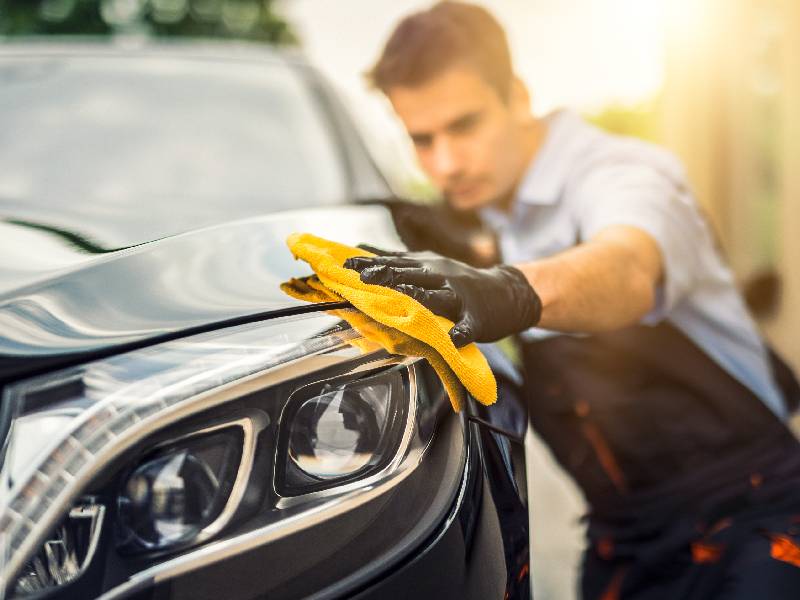
There are few scenarios more precarious than a car parked under a tree in early spring. You not only have to be concerned about bird poop when parking under a canopy, but you also have to worry about drops of sap damaging your car’s paint. (Believe us – it happens more frequently than you think!)
Although a little tree sap on your vehicle doesn’t seem like the end of the world, it can quickly become problematic if left to dry. Left under a beating sun, tree sap on a car hardens like epoxy, and the longer it’s on a vehicle’s exterior, the more potential there is to strip away the paint and eat through the clear protective coat.
However, sap won’t mangle your vehicle’s paint overnight. If your car has just recently been the victim of a wicked maple tree, there’s still time to remedy the soon-to-be problem. Here are some tips to help you get rid of tree sap without ruining your car’s paint.
Before we begin, here’s a forewarning: cleaning tree sap off a car can be quite a difficult task, especially if it’s dry sap. It requires a lot of elbow grease, free time, and the right weather. If you aren’t in a position to complete this DIY project, you should consider visiting a local auto paint shop for professional assistance. Over and out.
Hand Wash ASAP
Need to know how to remove pine sap from a car without damaging paint? (At least you think it’s pine sap…) Automatic car washes are convenient, but they rarely help to clean old tree sap from your vehicle’s exterior. In fact, automated car washes may even make matters worse by spreading the sap around! A good hand-washing is the best way to get sap off a car , particularly if you’re able to take a sponge to your vehicle before the sap has a chance to dry.
- To start, grab all your materials: a couple of buckets of hot water – the key to cleaning tree sap is hot water – a hose or power washer, sponges, carwash soap, and a microfiber cloth.
- Next, park your vehicle somewhere shady (but not under a tree). Sun will prematurely dry water, leaving water stains and increasing the odds of being scratched.
- Then, rinse your vehicle thoroughly, leaving no nook or cranny un-rinsed. If you choose to use a power washer, be sure the nozzle is put on a wider setting to ensure it won’t damage the paint.
- Once the vehicle has been rinsed, scrub the sap and entire car with a clean sponge or washing mitt and soap. Again, hot water makes a big difference as heat helps soften any dry sap.
- Rinse and repeat, literally, until the sap is no longer visible. You can use your fingernail to scratch away any leftovers.
- Finally, dry the car completely and apply a strong coat of car wax. Polish it up for good measure.
Most people will find the hand-wash method successful, though you may need to take additional steps to remove stubborn tree goop on a car. Check out these other methods to get rid of sap:
Rubbing Alcohol or Mineral Spirits
- Soak a clean cloth or rag – be sure it’s clean! – in mineral spirits or isopropyl rubbing alcohol* until thoroughly dampened.
- Apply the soaked cloth directly to the tree sap, allowing it to sit for approximately 30 seconds. (Note: Alcohol can strip away auto paint and clear coats, so don’t leave the rag on your vehicle for too long.)
- Check the sap – has it softened? Can you rub it off with the cloth? If not, repeat step 2. If the sap is more pliable, continue to step 3.
- Gently wipe away the sap, using a circular “wax on, wax off” motion. If needed, pour a steady stream of piping-hot water directly on the tree sap for 15 seconds, then wipe any leftovers away.
- Finally, rinse and wash the area with hot water and soap to remove any remnants of alcohol.
*Additionally, you can use hand sanitizer or another type of alcohol as a tree sap remover for cars.
Razor Blade
Wondering how to remove tree sap from a car if it’s really baked on and dried? A razor blade may be used, though it’s important to note that this could do more damage to your car paint! Proceed with caution!
- First, loosen the sap by using a commercial product, rubbing alcohol, or an oil-based lubricant.
- Grab a clean razor blade/utility knife* and very gently and safely attempt to scrape the sap off.
- Slowly wiggle the blade underneath the sap, which will give yourself the opportunity to “peel” it away.
- We can’t stress it enough – go very slowly! Any wrong move can strip away or leave a dark gouge in your paint, requiring you to visit an auto body shop for repairs.
*This is a last-resort method, as taking a sharp blade to your vehicle can seriously damage your car’s paint if done incorrectly. It’s a great method to remove tree sap from windshields and windows, but using a blade on your paint is risky.
WD-40
Did you know you can use WD-40 to remove sap from car paint? It really is a miracle cure-all!
- Spray WD-40 directly on the sap stain and allow it to soak for 5 minutes.
- Apply a wet cloth, soaked in hot water, on top for added penetration. (Optional)
- Use the cloth to rub away the sap, repeating steps 1 and 2 as needed.
- Once the sap is gone, wash the area with hot water and soap.
Cooking Oil
- If the sap is fresh, you can coat it in non-toxic cooking oil, such as coconut oil or canola oil. Let it sit for 5 minutes.
- Apply a wet cloth, soaked in hot water, on top for added penetration. (Optional)
- Wipe away the sap, repeating steps 1 and 2 as needed.
- Finally, wash the area with hot water and soap.
Commercial Cleaners
- Purchase a commercial cleaning or adhesive removal product that’s designed to help remove sticky substances. Goof Off, Goo Gone, Turtle Wax Bug and Tar Remover, and 3M™ Adhesive Remover are all good options, but there are numerous products that work well. (Feel free to ask us what the best sap removers for cars are!)
- Follow the product’s directions for use, or apply the chemicals to a clean cloth and leave it on top of the sap for a few minutes.
- Wipe away the sap and repeat step 2 as necessary.
- Once the sap is a goner, wash the area with hot water and soap.
Baking Soda
- Create a thick paste out of warm water and baking soda.
- Cover the tree sap on your car with the paste, gently spreading it around without scratching the paint.
- Allow this to sit for a few moments.
- Pour a stream of boiling water over the top of the sap and baking soda.
- Wipe the area down with a clean, damp rag.
Visit a Trusted Auto Paint Shop for Professional Sap Removal
How long does it take for tree sap to damage car paint? That all depends on the pitch or sap, the elements, sun exposure and how well you’ve protected your vehicle. You have at least a few days, if not weeks, to remove hardened sap from your vehicle without damaging paint. After that, all bets are off! Of course, if you simply can’t get rid of that tree sap or don’t want to run the risk of further damaging your vehicle’s paint job, your best bet may be to take a trip to a car body shop like our McCarthy Collision Centers in Kansas City. Professional technicians should be able to clean off the sap and re-paint any stripped-away areas in no time. Contact one of our auto paint shops in Missouri or Kansas to receive a free quote for repairs, and stop parking underneath trees, would ya?
Sources:
- https://googone.com/
- https://goofoffproducts.com
- https://www.3m.com/
- https://www.turtlewax.com/
- https://jalopnik.com/you-can-use-hand-sanitizer-to-remove-tree-sap-from-your-1778908321
8 tips to clean bird poop off car paint
Bird droppings, dookie, scat, excrement, poo-poo, feces—whatever you call it, bird poop is one of the most common causes of automotive paint damage in Kansas City and the world. With a pH between 3 and 5, bird poop is high in uric acid, a corrosive element that can quickly damage your vehicle’s exterior. Left for too long, dried bird droppings will degrade your clearcoat and may even bleach the paint itself. Yikes!
So, the next time a bird goes kersplat on your car’s bright red hood, be sure to wash that sucker off before it etches itself into the paint! But what’s the best way to clean bird droppings off a car? Here are a few tips to get your vehicle un-poopified.
Soaked Cloth
To clean dry bird poop that has been on your car since the Reagan administration, soak a microfiber cloth in a vehicle-safe cleaning solution – ask your Kansas City auto body shop for recommendations, if needed – and leave the cloth on the stain for 15 minutes. Gently rub it away, repeating the task on seriously stubborn bird poop stains.
Once you’ve cleaned all the bird droppings off, smooth out your vehicle’s paint with a clay bar or a small amount of polish, buffing it to match the rest of the vehicle.
Seltzer Water or Club Soda
Semi-fresh bird poo can be easily wiped away with a microfiber cloth and some seltzer water. The carbonation from the seltzer water helps to break down the poop’s natural acidic qualities. Splash some on the fresh avian turd, let it sit for a few minutes, and swipe it all away in one quick Karate Kid motion.
Note: It’s not recommended that you use carbonated cola or sugary sodas as an alternative! They’ll leave sticky residue everywhere and can even further damage your paint job, wax, and rubber sealants.
Specialty Bird Poop Wipes
Made of biodegradable, composite bamboo materials, Drop Wipes do an admirable job of ridding your vehicle of birds’ unsightly turds. The company’s patented cleaner neutralizes the acid in the poo, allowing you to simply swipe and go. If you frequently park under trees or near ponds, be sure to keep a pack in your glove compartment.
Car Detailer Spray
The best tool to prevent wrinkled etching caused by bird poop is a specialty car detailer spray. A few spritzes will dissolve bird droppings in seconds, and a moist cloth or towel will remedy bird poop etchings and stains completely. The biggest benefit of using car detailing spray is that it won’t harm your vehicle’s paint or wax coating – that’s its purpose, right? – but rather restore its shine. For advice on a quality auto detailer spray, speak with a member of our McCarthy Collision Centers.
Baking Soda
If you didn’t know, baking soda is pretty awesome. Not only does it deodorize fridges and clean your teeth, but it also helps to remove bird poop from cars. A simple mixture of baking soda (2 tablespoons), dish soap (a teensy squirt) and hot water, spritzed from a spray bottle onto the droppings and left to soak for 10 minutes, should clear off most stingy bird crud. Rinse with a hose and repeat.
WD-40
Did you know that the amazing, multipurpose WD-40 spray can be used to clean off dry bird poop? It’s true! In about the time it takes for Thanos to snap his fingers, WD-40 will loosen dry bird droppings, enabling you to eliminate stains with a single wipe or rinse from the hose. Plus, you won’t need to get your hands dirty! (Check out WD-40’s additional 200-plus automotive uses too.)
Unscented Laundry Detergent (on Upholstery)
Maybe you were dumb unlucky enough to keep your sunroof open or top down as you went grocery shopping. Maybe a flock of ducks, 45 minutes after their last meal, decided to fly directly over your vehicle while you were comparing cans of refried beans. (You get where we’re going…)
To clean bird poop off your car seats, upholstery, or even a fabric convertible top:
- Let it dry. While that may seem counterintuitive, dry bird poop on car upholstery is easier to clean compared to wet poop, which can smear and spread.
- Once dry, pick the bird droppings off with a plastic scraper, nail file, your fingernails—anything that won’t rip the fabric.
- A chalky residue or white stain will remain. Treat these stains with a drop of unscented liquid laundry detergent, and gently pat with a damp cloth.
- Rinse the cloth and slowly scrub until the stain and detergent are gone.
- Air dry, away from bird flight paths.
Get Help From a Professional Car Detailer
In the case of a really disgusting bird-poop bombing, it may be in your best interest to let a pro detail your car. After a thorough wash, wax, and polish, your vehicle will look brand new. If you need help repainting your car in Kansas City, visit one of our auto body shops in Missouri or Kansas. We offer a variety of auto body services, including detailing and paintless dent repair. Take that, Tweety Bird!
Sources:
https://www.nsford.com/blogs/2500/car-detailing/5-surefire-ways-to-get-dry-bird-poop-off-your-car/
https://www.audubon.org/news/how-live-bird-poop
https://www.dropwipes.com/
https://carfromjapan.com/article/car-maintenance/bird-poop-on-car-how-to-recover-car-paint-damage/
https://www.wd40.com/uses-tips/automotive/all
Connect with us


- October 2025
- September 2025
- August 2025
- July 2025
- June 2025
- March 2025
- February 2025
- January 2025
- December 2024
- November 2024
- September 2024
- August 2024
- July 2024
- June 2024
- May 2024
- March 2024
- January 2024
- December 2023
- November 2023
- October 2023
- June 2023
- April 2023
- February 2023
- January 2023
- December 2022
- October 2022
- September 2022
- August 2022
- June 2022
- May 2022
- April 2022
- March 2022
- February 2022
- January 2022
- December 2021
- November 2021
- October 2021
- September 2021
- August 2021
- July 2021
- May 2021
- April 2021
- December 2020
- August 2019
- June 2019
- March 2019
- November 2018
- February 2018
- November 2017
- August 2017
- July 2017