

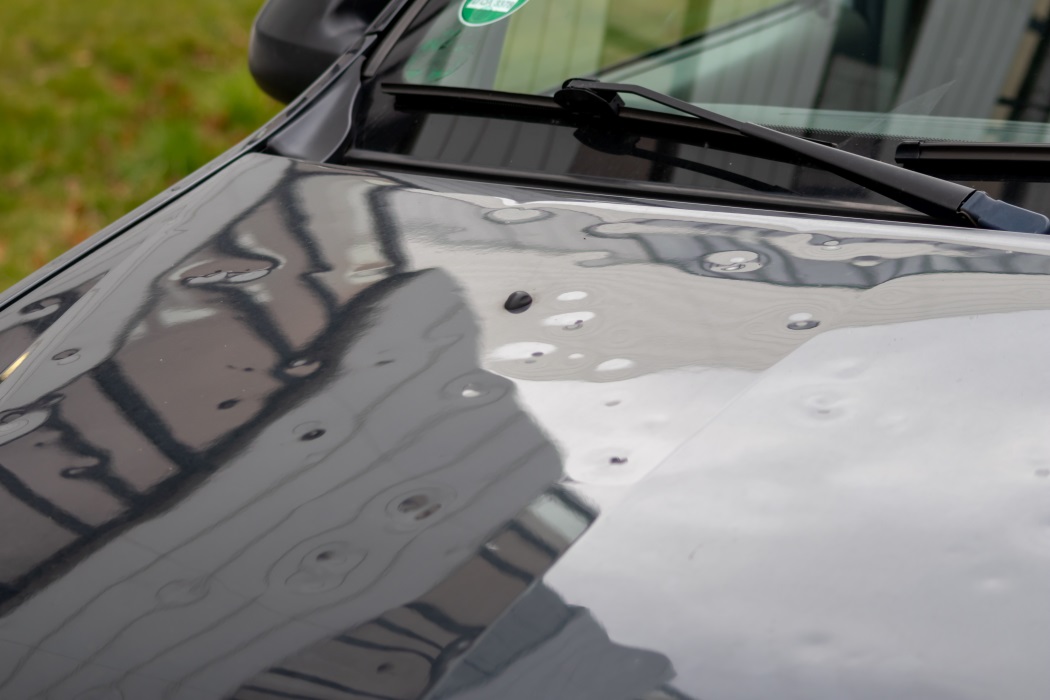
Hail damage is an interesting thing to deal with, to say the least. Why? Well, when hail
hits the area where you live, you could deal with anything from small dents on your car’s hood and roof to
shattered windows, depending on how large the hailstones are. Let’s look at what hail damage can do to your car,
how it affects your vehicle in the long run, and how you can fix and prevent it.
How Does Hail Damage Cars and Trucks?
Hail damages your vehicle by raining down from the sky at speeds up to around 72 mph.
Small and medium hailstones (less than 1 inch in diameter and 1-2 inches in diameter, respectively) generally
hit your car or truck at speeds between 9 and 25 mph. Large hailstones (2 or more inches in diameter) often hit
vehicles at 25 to 40 mph, but the strongest storms can send hailstones of all sizes hurtling towards your car at
speeds of over 70 mph, which is higher than the speed limit in most areas of the U.S.
What does that mean for your car? Well, small to medium hailstones hitting the ground
and other surfaces at lower speeds will likely just chip some paint and leave small dents on your vehicle’s
hood, roof, trunk, and sides. But if a storm brings larger hailstones and/or higher speeds, you could be looking
at much larger damage, like a shattered windshield or back window, or large dents that make it hard to shut your
car’s trunk, hood, or side doors.
Ultimately, if hail leaves a lot of car damage in its wake when a storm blows through your
area, you could even end up with a totaled vehicle if the damage goes unchecked.
Can Hail Damage Be Repaired?
Whether hail damage can be repaired really depends on the kind of damage that it is.
For example, an auto body shop near you, like McCarthy Collision Centers, can easily remove small dents on your
car or truck’s exterior. But if a windshield or other window breaks, they’ll have to replace it entirely.
Don’t worry, though. It’s fairly simple to figure out what kind of hail damage your vehicle
has sustained. According to Kelley Blue
Book, there are three main types of hail damage:
- Cosmetic Damage: This damage category covers small dents on your
car’s exterior without any chipped paint. Some car owners try to fix this type of damage themselves, but it’s
often best to let professionals do it, since they have tools and experience to handle this damage efficiently.
They often repair this damage using techniques called paintless dent repair, usually
called PDR for short. - Cosmetic Damage with Chipped Paint: The damage in this category is
similar to regular cosmetic damage, but the chipped paint makes it harder to fix. When a car has dents and
chipped paint due to a hailstorm, body shop technicians have to fill in the dented spots and then sand, prime,
and repaint them. If a body panel on your car has enough of these dents with chipped paints, it can become
much cheaper and easier to replace the entire panel (whether that’s the roof, hood, trunk, or side door). - Major Damage: This hail damage category includes very deep dents, bent body panels, and
broken windows and mirrors. When your car sustains this kind of intense hail damage, it’s best to have the
effected body panels replaced because at this point, smaller repairs won’t be much help.
What Should You Do When Your Vehicle Sustains Hail Damage?
When your car or truck sustains hail damage, take pictures of it. Then reach out to
your insurance provider to see if your policy covers hail damage. If it does and you have enough damage per the
policy, file a claim. After everything is squared away with your insurance company, you can take your vehicle to
a body shop to have the damage repaired.
If your insurance doesn’t cover hail damage or you don’t have enough per the policy to
file a claim, you can begin reaching out to body shops to get quotes for repairs.
And if it turns out that your car has taken enough hail damage to be totaled, you may find
yourself in the market for a new vehicle.
How Can You Avoid Car Hail Damage?
Luckily, hail damage can be avoided altogether. The best way to avoid it is to park
your car in a garage, carport, or otherwise covered parking spot. If that’s not an option, you can drape heavy
blankets over your car hood, windshield, roof, and trunk to soften the effect hailstones with have on your
vehicle. You can also invest in a portable storm protector if you live in an area that’s especially prone to
hail.
Hailstorms are generally fairly short-lived, only lasting minutes on average. If you don’t
have access to a garage or other solid structure at home, you may be able to drive to a gas station or other
covered spot to wait things out.

Remove Your Car’s Hail Damage in the Kansas City Area
If you need to remove hail damage from your car’s exterior, we at McCarthy Collision Centers are here for you. We can assess your damage and give you a quote
for it, and then remove it so you can drive around safely. We have multiple convenient locations around the
Greater KC are, including Lee’s Summit, Olathe, Blue Springs, and Overland Park. Contact us on our website to
find your nearest location.
Connect with us


- October 2025
- September 2025
- August 2025
- July 2025
- June 2025
- March 2025
- February 2025
- January 2025
- December 2024
- November 2024
- September 2024
- August 2024
- July 2024
- June 2024
- May 2024
- March 2024
- January 2024
- December 2023
- November 2023
- October 2023
- June 2023
- April 2023
- February 2023
- January 2023
- December 2022
- October 2022
- September 2022
- August 2022
- June 2022
- May 2022
- April 2022
- March 2022
- February 2022
- January 2022
- December 2021
- November 2021
- October 2021
- September 2021
- August 2021
- July 2021
- May 2021
- April 2021
- December 2020
- August 2019
- June 2019
- March 2019
- November 2018
- February 2018
- November 2017
- August 2017
- July 2017