

If the stars align, automakers will be tasked with finding a solution to drunk driving in the next few years. At least, that’s one of the primary goals laid out in the country’s new infrastructure bill, which has been see-sawing on “yay” or “nay” for months.
Drunk drivers injure more than 300,000 people and kill over 10,000 people a year, the latter of which equates to nearly half of all traffic-related fatalities. Considering the data indicating that only 2% of Americans drive while intoxicated, that’s a lot of unnecessary pain and death. So, even if the “nays” end up securing a “win,” it’s important to note that mandates aren’t necessary for automakers to do the right thing and start producing cars with anti-drunk-driving technology. Heck, some would argue that it’s the smart choice given our shared proclivity to, you know, stay alive.
What exactly could vehicles to do stop drunk driving? Is there already technology out there or does it need to be invented before 2026? According to some engineers and industry experts, we’re close to figuring it all out.
The Options: MADD + DADSS
The Driver Alcohol Detection System for Safety (DADSS) is the project automakers and the NHTSA have developed. Their goal: Create new technology to passively detect intoxicated drivers before they can get on the road.While automakers and the Transportation Department investigate possible solutions, Mothers Against Drunk Driving (MADD) has identified over 240 different automotive technologies that could prevent intoxicated driving. Some of their proposed solutions are fantastical, though others are more pragmatic and utilitarian. Below are some technologies that may prove to be useful right away.
Advanced Driver Assistance Systems
Currently, the best in-vehicle technology to save lives due to drunk drivers all fall under the “advanced driver assistance” umbrella. In particular, systems like lane-change warning, lane-change assist, attention monitoring, and emergency automatic braking all serve a purpose in this endeavor.
Lane Change Warning/Assist
This technology alerts the driver when they’ve ventured outside of their lane without using a turn signal. Some of these systems sent vibrations and audible warnings, while others actually provide corrective steering to keep the vehicle in its lane.
Nearly all automakers have lane-change alert/warning as either standard or optional equipment on their vehicles.
Attention Monitoring
Many automakers, including GM, Hyundai and Nissan, already have some form of eye-tracking technology to detect distracted drivers. These systems keep watch for any signs of inattentiveness and may even provide corrections to prevent collisions. While they’re not entirely foolproof, they may be the most practical, short-term solution to stop drunk drivers behind the wheel.
As of 2022, driver monitoring is available on most new vehicles, including those produced by GM, Honda, Hyundai, Nissan, Subaru, and Toyota.
Emergency Automatic Braking
If a collision is imminent, this system automatically applies the brakes to prevent or reduce damage. The systems may also be able to detect and brake for pedestrians.
Most new vehicles offer emergency braking, with or without pedestrian detection.
Push-Button Starter with Sensors
Wisconsin’s WISN 12 interviewed Dr. Walter Schilling, a software engineer, to discuss the potential tech that could eliminate drunk driving.
“One of the initial ideas is some sort of a sensor that would either be embedded in the start button or on the steering wheel,” Schilling said. “And what it would do is shine infrared light into your finger and basically look for the telltale signs of alcohol in the blood.”
David Harkey, president of the Insurance Institute for Highway Safety, also believes in technology like this. “I actually think this particular technology could save more lives than airbags,” he said. “We’re talking about more than 10,000 people that are losing their lives annually as a result of alcohol-impaired driving in the country.”
Breath and Air Analyzers
Schilling also mentions that traditional breathalyzers could be modified to measure the alcohol content in the cabin itself, not just the person’s breath.
MADD calls this technology “passive alcohol detection,” which they claim could prevent more than 9,400 lives per year if it’s made standard on all vehicles. The following brands either have or are developing these systems: Ford, GM, Honda, Hyundai, and Toyota.
DADSS researchers have designed special sensors, mounted on the vehicle’s dash or windshield, that only require drivers to breath in its direction to check their approximate blood alcohol content (BAC). As part of a pilot program, these sensors are actually being utilized by small freight companies to monitor drivers of large transportation trucks.
Self-Driving Vehicles
Of course, self-driving or autonomous vehicles have been “on the horizon” for several years now, yet there have been many hiccups and speedbumps to make them commonplace. For one, many people can’t afford to pay close to $100,000 for a self-driving electric car, which puts this technology out of reach for most.
There are affordable alternatives, however. The average car buyer might look at Chevrolet, which has produced a semi-autonomous driving feature, Super Cruise, in its new Chevy Bolt EUV. The new Bolt isn’t the solution to drunk driving, but it’s a step in the right direction.
How to Report a Drunk Driver
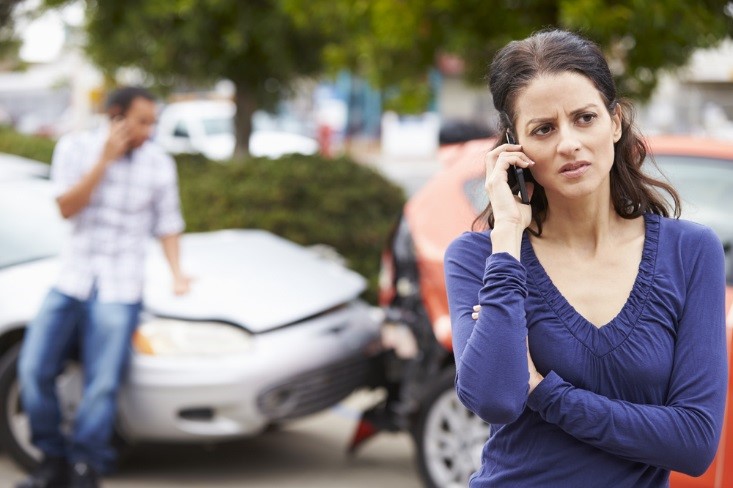
If you suspect a drunk or intoxicated driver on the road, please report it. You have an obligation to keep yourself, your family and your fellow humans safe.
For Kansas City drivers, you can report erratic behavior in several ways, according to the Kansas Highway Patrol and Missouri State Highway Patrol:
- Call *47 to report an immediate problem, such as an erratic driver on a Kansas highway.
- Call *KTA (*582) to report an immediate problem on the Kansas Turnpike.
- Dial 1-800-525-5555 or *55 to report a traffic crash, emergencies, intoxicated or drugged drivers, reckless driving, vehicle problems, hazardous material spills, or criminal activity.
- Dial 911.
Now, if only they would create technology that disables vehicles when drivers are caught texting. (Don’t text and drive!)
If you’ve been the victim of a drunk driver and require a good body shop in Kansas City, request a tow to McCarthy Collision Centers. We work with nearly all insurance companies, offer free estimates, and provide professional autobody repairs quickly. Call 1-800-NEW-AGAIN to speak with our team in Olathe, Blue Springs, Overland Park, or Lee’s Summit.
Connect with us


- October 2025
- September 2025
- August 2025
- July 2025
- June 2025
- March 2025
- February 2025
- January 2025
- December 2024
- November 2024
- September 2024
- August 2024
- July 2024
- June 2024
- May 2024
- March 2024
- January 2024
- December 2023
- November 2023
- October 2023
- June 2023
- April 2023
- February 2023
- January 2023
- December 2022
- October 2022
- September 2022
- August 2022
- June 2022
- May 2022
- April 2022
- March 2022
- February 2022
- January 2022
- December 2021
- November 2021
- October 2021
- September 2021
- August 2021
- July 2021
- May 2021
- April 2021
- December 2020
- August 2019
- June 2019
- March 2019
- November 2018
- February 2018
- November 2017
- August 2017
- July 2017