• McCarthy Collision Center

Blog / Car Tips

Paintless Dent Repair: What, When, and Why

Paintless Dent Repair: What, When, and Why

Paintless dent repair gets your vehicle back into good physical health in a quick, easy, and affordable way. Sometimes things can happen, such as backing into an obstacle, getting into a fender bender, or, in some cases, dents can even just seem to magically appear. Whatever the cause, dents in your vehicle don’t look so great, and they can negatively impact the value of your vehicle if you were considering selling or trading-in. 

But what is paintless dent repair exactly? How does it differ from your run-of-the-mill dent repair? When should you opt for one and not the other? In this paintless dent repair overview, we’ll look at what you can expect from the service at a collision repair center and when it’s right to choose paintless dent repair. Let’s dive in. 

What is Paintless Dent Repair? 

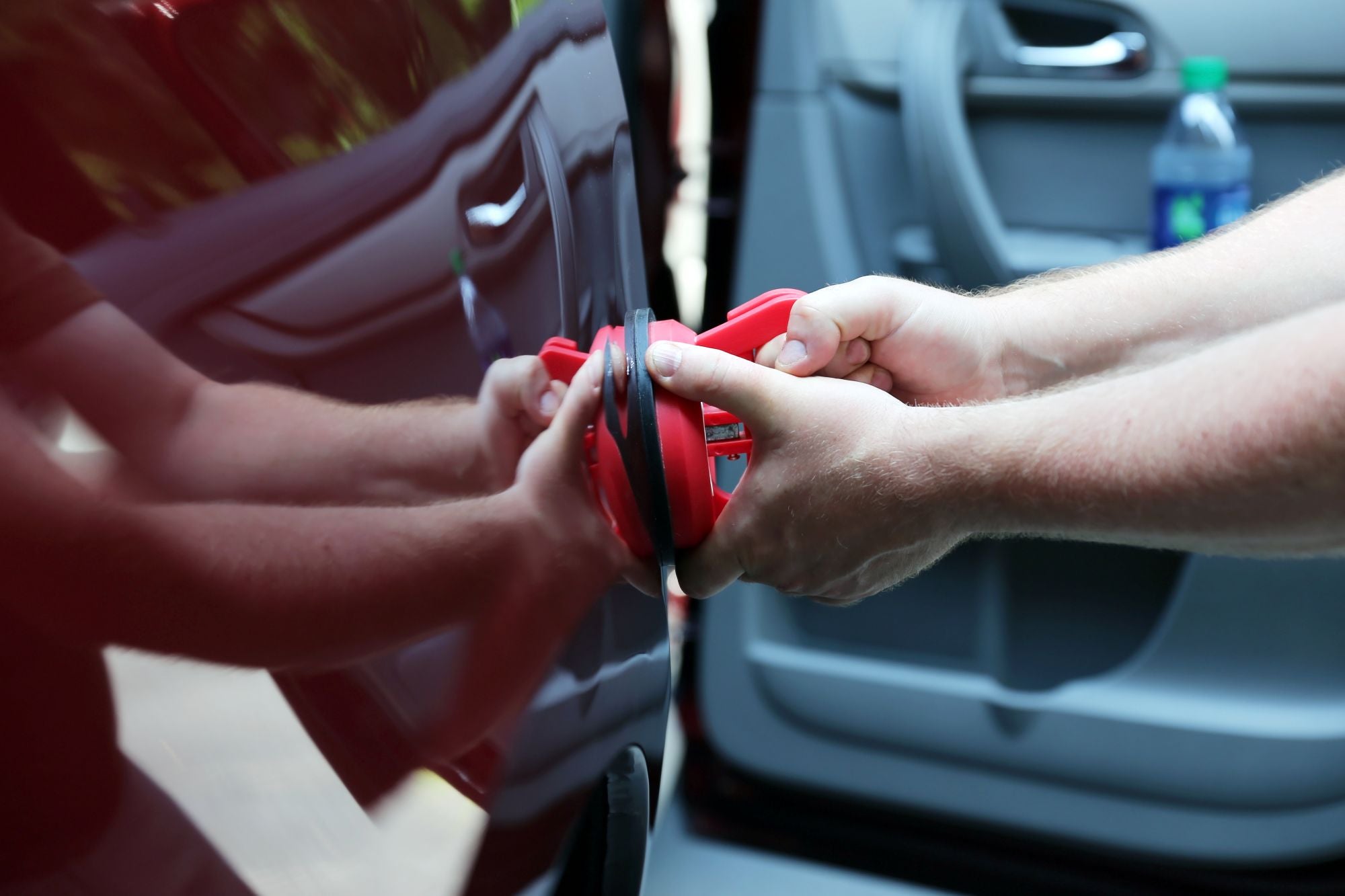
Without getting too technical, the one main thing you need to know about dent removal is that it hinges on the metal’s “memory.” In other words, assuming the metal hasn’t been bent out of shape too much or for too long, it can revert to its original state and shape. When the dent or ding isn’t too severe, the auto body repair shop will coax the metal back to how it should be. Sometimes this is done by accessing the dent from the other side (aka, the interior of the vehicle) or by using a suction tool to “pop” the dent out.  

And that’s it. Simple as that. No pounding, grinding, or sanding. And then, no need for a paint application to cover up the cosmetic damage, hence the name “paintless dent repair.” 

When Should I Choose Paintless Dent Repair? 

In Kansas City, we’ll sometimes get hailstorms, and those little nuggets plummeting back to Earth are key culprits of dents and dings in vehicles. If you have kids in your neighborhood, you might notice a ding that’s suspiciously the size of a football. Regardless, if you find dents on larger pieces of the vehicle’s body, such as the doors, hood, or roof, paintless dent repair is a quick and affordable option to get the dings out. 

When Do I Need Traditional Dent Repair? 

When dents and damage to the vehicle are more severe, or the paint has cracked in the dent or around it, you may need to opt for traditional dent repair over paintless dent repair. They’ll need to hammer out the metal to get it back into shape, grind, and sand the area down to have a fresh canvas to apply new paint. Because of the extra labor involved, this process is a bit more costly. However, at McCarthy Collision centers, we make it as affordable as possible and offer service specials to help you save. 

Choose McCarthy for Paintless Dent Repair 

If your car has a few dents and dings, bring it to our collision center to see if it’s eligible for paintless dent repair. Our expert technicians understand vehicle repair and dent removal and can help get your car, truck, or SUV back into tip-top shape. Contact us today to find the McCarthy Collision Center near you

Posted in:

Related Posts

Is My Car Totaled? An Informative Guide

Is My Car Totaled? An Informative Guide

An accident is a stressful, harrowing, and terrifying experience every time it happens. Whether it’s a moderate fender bender, a collision when your vehicle was parked, or a major crash, one of the biggest concerns once your nerves have settled is whether your vehicle is all right. Will you need dent repair? Is it worth saving? It’s never a good feeling to find out your car, truck, or SUV is totaled, but the waiting can often make matters worse. However, there are a few ways to accurately guess the diagnosis. If you don’t want to ask yourself, “Is my car totaled?” after an accident, this guide is here to help. Read on to learn how to determine if your car is totaled. more What Makes a Car Totaled? Say you’ve been in an accident. Your car’s current value is around $5,000. If the cost to repair the vehicle is less than that number, assuming you have auto insurance with collision coverage, you’ll receive a check for the repairs. If the cost of repair is more than your vehicle’s value, then your insurance company will likely claim the vehicle totaled. It’s important to research your insurance policy to see if there’s any difference in its definition of totaled. Some states and insurance companies will use a percentage threshold to claim your car is totaled (for example, if the repairs cost 80% of the vehicle’s book value). They may also claim the car is totaled if it’s unsafe to drive and unfit for the road, even if it were fixed. How to Determine if My Car is Totaled If your vehicle sustained excessive damage to the front end, there’s a strong likelihood your vehicle will be considered totaled due to the fact that most of the crucial components are housed there. Damage to your frame is another incredibly expensive and difficult-to-repair part of your vehicle and will likely result in a totaled diagnosis. Heavy leaks from the brakes, coolant, transmission, or any other part under the hood may not necessarily mean your vehicle is totaled, but you may want to plan for the news that it’s totaled. When the engine won’t start after a collision, it’s never a good sign. Engines are (naturally) some of the most expensive components to a vehicle, and if yours is damaged, your insurance company will likely claim the vehicle is totaled. While there is a chance your vehicle isn’t totaled despite any of the examples above, there’s one (almost) surefire way to tell if your vehicle will be considered totaled: fire damage. Top 3 FAQs About Totaled Vehicles Is My Car Totaled? If the cost of repairs exceeds (or in some cases comes close to) the current value of your vehicle, or if it would be deemed unsafe to drive after repairs, your insurance company will likely consider it totaled. How Much Will Insurance Pay for My Totaled Car? If the car is claimed totaled, the insurance company will send you a check for your car’s pre-accident value. What Happens When Your Car is Totaled but Still Drivable? If your vehicle could be repaired, but your insurance company has deemed it totaled, it is, in fact, totaled. You can either sell it to the insurance company for your payout, or choose to keep it and be given a salvaged title. This increases the difficulty of insuring the vehicle, trading it in, or selling it, so choose carefully. Trust McCarthy Collision Centers If you’ve been in an accident or need repairs to your vehicle, bring it to one of our McCarthy Collision Center locations for fast, easy, and affordable service. From oil changes to insurance claim assistance, we work with you to reduce stress when you need your vehicle repaired. Contact us today for more information or to get your vehicle back into road-ready shape.

Man signing car insurance document or lease paper. Writing signa

Car Leasing Vs. Car Buying in Kansas City

Whether it's at the beginning or the end of the process of searching for a new car, truck, or SUV in Kansas City, you'll need to determine if you want to purchase or lease. Is it better to pay more over a longer period of time to own the vehicle, or is it better to pay a lower amount to have the car in your care for some time and then repeat the process in a few years? Only you can decide which is best for you, and it often comes down to budgeting, but we'll review the perks and drawbacks of buying vs. leasing a vehicle to help you determine which path to take. Buying a Vehicle in Kansas City The Basics: You find the new car, truck, or SUV you like, and it feels comfortable to drive and negotiate a price that works for your budget and the dealership. You can also lower the overall cost by trading in your current vehicle, and the more you put towards a down payment will lower the amount you need to borrow as a loan. The lower the loan = the less you pay monthly. When purchasing a car, you can choose the accessories and features you want and need in your vehicle. If you want to upgrade the sound system to turn every drive into a private concert or front-row seats to your favorite podcasts, that's an easily accessible possibility. You also can drive as much as you want. Have a big road trip lined up? You can drive as much as you want without fear of breaching a contract. Once your loan is paid back, you own the car outright. Working with a trusted finance center at a dealership is one of the best things you can do. For example, our team works with our vast network of trusted lenders to find you the best rates to make the vehicle of your dreams a reality. No matter what your credit score is, we'll help you drive off the lot happily and confidently. The Drawbacks: The unfortunate truth is that 99% of cars start to lose value the second you drive away from the dealership, which means you won't get the best return on investment if and/or when you decide to sell it. Now, to be fair, as opposed to a lease, you can sell it when you choose to. Buying a vehicle will be more expensive upfront because of the down payment, but the monthly payments will likely be lower. You're also subject to sales tax and interest on the total value of the vehicle. You'll have a warranty, but coverage will likely end before you sell, which means repairs for costly damages will fall on you (transmission, alternator, etc.). Leasing a Vehicle in Kansas City The Basics: A lease is effectively renting the car, but at a much lower rate than purchasing the car outright. Most leases last 2-3 years, and during that time you'll have a contracted number of miles you can drive before you start to incur penalties (in the form of fees). To put it in the simplest terms and perspective, you'll pay less for the lease during the 2–3-year period than you would during that same amount of time if you purchased the vehicle. When you lease, you get the latest features in new vehicles and can enjoy the ride vs. driving an older model that doesn't have all the flash that other vehicles do. You also don't have to worry about the car depreciating in value. Speaking of value, the warranty will cover most if not all of the lease period, so maintenance costs are low if not $0. The Drawbacks: Once the lease ends, you're back at square one, needing to pay a down payment and go through financing. You'll also have to adhere to the mileage limits of your lease, the upper limit of which is usually around 15,000 miles per year. If you're someone who likes taking road trips, a lease may not be the best option. While you get all the latest tech and safety features, there's little room for customizing the vehicle to your liking — what you see is what you get. While the warranty will cover most maintenance tasks, it doesn't cover all of them, and you'll need to go to specific service centers and use manufacturer's parts, which can be a bit more expensive, but they won't void the warranty. You also need to be on top of your payments as failure to pay can be seen as breaking the leasing contract and, therefore, incurs some hefty fines. Buy or Lease Your Next Vehicle in Sedalia No matter your choice, buying or leasing your next vehicle with McCarthy guarantees you'll get the best rates and the highest quality vehicles that will run reliably and keep you and your passengers or family safe. Contact us at one of our locations for more information or to set up a test drive.

0ae78f275d7d46a9b23780429dcd54fc

7 Tips to Avoid Potholes

There are only a few worse feelings than driving along, enjoying your favorite song, playlist, or podcast on your way to work or home, and bouncing in the driver's seat because you hit a hidden pothole in the road. It can turn a good day into a bad one or a bad day into a worse one; now you need to worry about pothole damage to your car, truck, or SUV and if you'll need to bring it to a service center for repairs. While drivers in Kansas City, Lee's Summit, and Olathe are no strangers to potholes in the roads, it never hurts to have a refresher course on how to avoid potholes and why you should bring your vehicle to your local service center. How to Avoid Potholes While it would be the simplest answer in the world to say, "Just look out for potholes and drive around them," and it may work most of the time, drivers understand that approach won't always work. Potholes can be hidden by water or debris, it could be too dark to see them in time, or any other number of reasons. So, while the first tip to avoiding potholes is to pay close attention to the road and avoid distractions (smartphones being one of the greater issues at hand), there is more that goes into dodging potholes on the road safely. Without further ado: Tip 1: Look Carefully If you can see it, you'll know how to avoid it. Reduce distractions and keep your eyes on the road. Tip 2: Drive Slower If you avoid speeding, you'll have more time to react when you see a pothole. Now, a caveat here is that other drivers on the road may make this more difficult. Someone tailgating you may cause you to speed up (and also be distracted looking in your rearview mirror). It's best to try and avoid speeding to give yourself the time to react. Tip 3: Avoid Puddles and Debris What may seem like average debris you can roll over or a puddle you can splash through on your drive may have a substantial pothole underneath it. Try to go around puddles as often as you can to dodge diving into a crater. Tip 4: Use Headlights Properly If it's dark, potholes look like any other portion of the road. Keep your headlights on and use the high beams when necessary to get as much lighting in front of you as possible to maximize visibility before it's too late. Tip 5: Keep to the Middle While potholes can technically pop up anywhere, you may see them more frequently on the sides of the road. Staying in the middle may lower your chances of hitting a pothole. Tip 6: Inflate Your Tires Following the manufacturer's tire pressure recommendations will increase your odds of soldering on over potholes and minimize damage. This isn't a surefire way to mitigate damage, but it can avoid flats or bubbles. Tip 7: Replace Worn Tires Tires with barely any tread left are more susceptible to punctures and bubbles when you run over a pothole. If your tread is looking low (or nonexistent), replace your tires to avoid a flat or a blowout. What to Do After Hitting a Pothole Check Your Vehicle If you hit a pothole and think your car, truck, or SUV may be damaged, here's a quick checklist to go over to assess your vehicle's status. Tires The first place to look is your tires. Check for flats or bubbles and replace them accordingly. Wheels If your tires didn't have enough tread or weren't inflated properly, your wheels may become bent, cracked, or overall damaged if you hit a pothole the wrong way. Shocks If you notice a bumpier ride after hitting a pothole, your shocks may be damaged or broken entirely. Make a note of how your car drives in the aftermath of hitting a pothole. Suspension and Alignment If your car shakes at higher speeds or pulls in either direction, your suspension or alignment may be to blame. If you think your vehicle needs suspension repair, it is best to take it to a service center. Exhaust Strange sounds may emit from your exhaust system if you hit a pothole, and you will need care from a trusted mechanic at a collision center. How to Repair a Pothole Report any potholes you come across to your city or county government. If you want to fill a pothole, this is the best way to go about it. Your local government has a road department that will fill them in (ideally quickly). Bring Your Car in for Inspection When you hit a pothole, and your car doesn't sound or handle how it used to, your vehicle is likely suffering from pothole damage and will need a keen eye to source and fix the issue. If your vehicle is suffering from pothole damage, bring it into one of our service centers: we service Blue Springs, Lee's Summit, Kansas City, Olathe, and Overland Park residents to help keep them driving safely. Contact us to find the closest pothole collision center near your, or call us to set up an appointment in any of these locations: Blue Springs, MO (816) 224-7575 Lee's Summit, MO (816) 313-4531 Olathe, KS (913) 324-7300 Overland Park, KS (913) 649-2999